Gönderi

Zarif Kapanış ve Sinyal İşleme - Graceful Shutdown Rehberi

Python uygulamalarında graceful shutdown implementasyonu. SIGTERM/SIGINT handling, Kubernetes lifecycle hooks, systemd integration ve cleanup best practices.

Zarif Kapanış ve Sinyal İşleme - Graceful Shutdown Rehberi

Production ortamında çalışan uygulamalar, kapatılırken veya yeniden başlatılırken zarif bir şekilde (gracefully) kapanmalıdır. Aksi takdirde, devam eden istekler yarıda kesilir, database bağlantıları düzgün kapatılmaz ve veri kaybı yaşanabilir. Bu yazıda, Python uygulamalarında signal handling, graceful shutdown ve cleanup stratejilerini derinlemesine inceleyeceğiz.

İçindekiler

  1. Graceful Shutdown Nedir?
  2. Unix Signals ve Python
  3. Signal Handler Implementation
  4. FastAPI/Flask Graceful Shutdown
  5. Database Connection Cleanup
  6. In-Flight Request Handling
  7. Kubernetes preStop Hooks
  8. Systemd Integration
  9. AsyncIO Cleanup
  10. Testing Graceful Shutdown
  11. Production Best Practices

1. Graceful Shutdown Nedir?

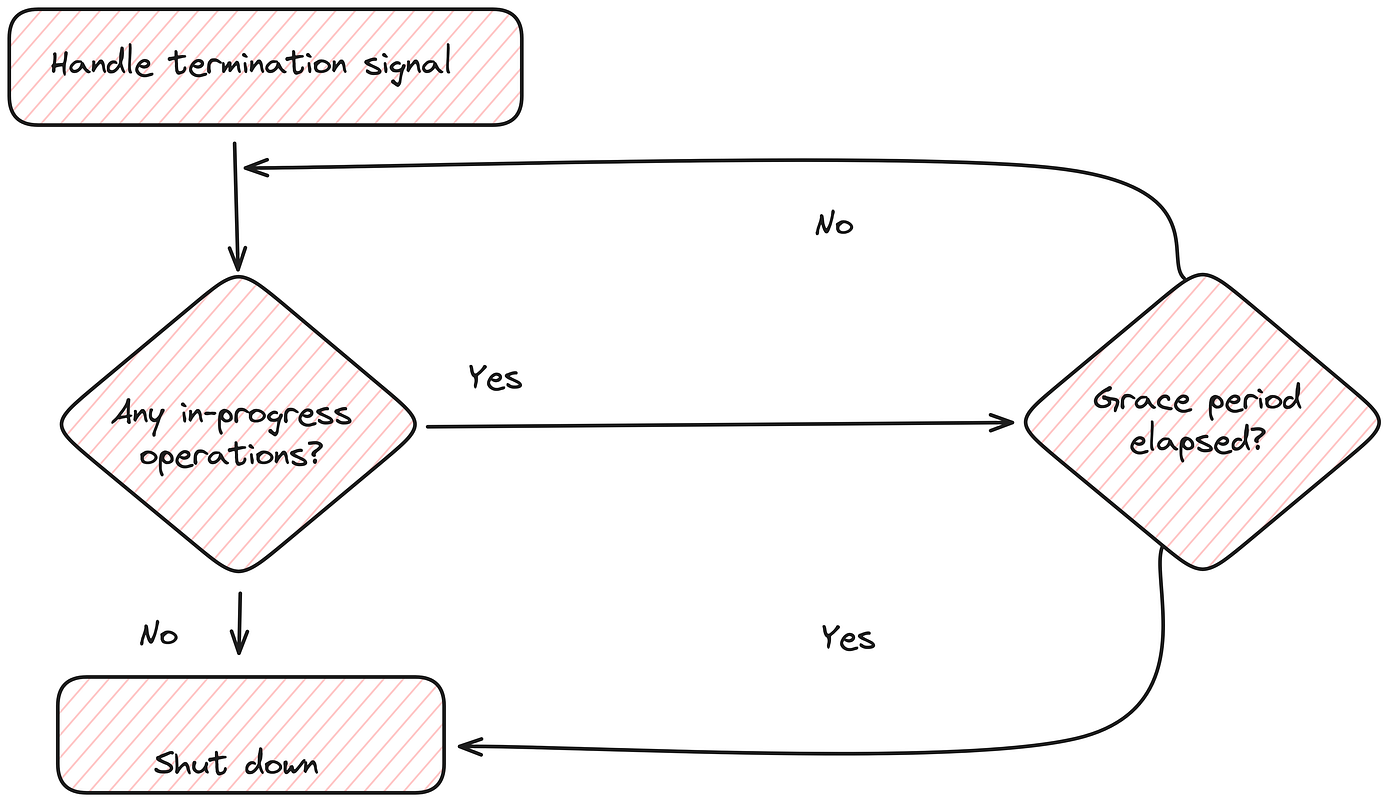
Graceful shutdown, bir uygulamanın kapatılma sinyali aldığında, mevcut işleri tamamlayıp kaynakları düzgün şekilde serbest bırakarak kapanmasıdır.

Graceful Shutdown Flow Graceful Shutdown Süreci

Neden Önemli?

❌ Ungraceful Shutdown Sorunları:

1
2
3
4
5
6
7
# Process kill edildiğinde:
-  Devam eden HTTP request'ler yarıda kesilir
- ❌ Database transaction'ları rollback olmaz
-  File descriptor'lar açık kalır
- ❌ Temp dosyalar silinmez
- ❌ Cache'ler flush edilmez
-  Downstream service'lere haber verilmez

✅ Graceful Shutdown Avantajları:

1
2
3
4
5
6
-  Devam eden istekler tamamlanır
-  Yeni istekler kabul edilmez (reject)
-  Database bağlantıları cleanly kapatılır
-  Resource'lar (file, socket) temizlenir
- ✅ State persistent storage'a yazılır
-  Downstream service'lere drain notification

Shutdown Phases

1
2
3
4
5
6
7
8
9
10
11
12
13
1. SIGTERM alındı
   ↓
2. Yeni istekleri reddet (health check fail)
   ↓
3. Mevcut istekleri tamamla (timeout ile)
   ↓
4. Background job'ları durdur
   ↓
5. Database/cache connection'ları kapat
   ↓
6. Temp dosyaları temizle
   ↓
7. Gracefully exit (exit code 0)

2. Unix Signals ve Python

Unix/Linux sistemlerde, process’ler arası iletişim signal’ler ile yapılır. Python, signal modülü ile bu signal’leri yakalayabilir.

Linux Signals Linux Signal Türleri ve Davranışları

Temel Signal’ler

SignalDeğerDefault DavranışYakalanabilir?Kullanım
SIGTERM15Process terminate✅ EvetGraceful shutdown (önerilen)
SIGINT2Interrupt (Ctrl+C)✅ EvetUser interrupt
SIGKILL9Force kill❌ HayırSon çare (ungraceful)
SIGHUP1Hangup✅ EvetConfig reload
SIGQUIT3Quit with core dump✅ EvetDebug amaçlı
SIGUSR1/210/12User-defined✅ EvetCustom logic

Signal Yakalama Basics

1
2
3
4
5
6
7
8
9
10
11
12
13
14
15
16
17
18
19
20
21
22
23
24
25
26
27
28
29
30
31
32
33
34
35
36
37
import signal
import sys
import time

def signal_handler(signum, frame):
    """Signal handler fonksiyonu"""
    signal_name = signal.Signals(signum).name
    print(f"\n🛑 {signal_name} sinyali alındı!")
    print(f"Frame: {frame.f_code.co_filename}:{frame.f_lineno}")
    
    # Cleanup logic
    cleanup()
    
    # Exit
    sys.exit(0)

def cleanup():
    """Kapatma öncesi temizlik"""
    print("🧹 Cleanup yapılıyor...")
    # Close connections, flush caches, etc.
    time.sleep(1)
    print("✅ Cleanup tamamlandı")

# Signal handler'ları kaydet
signal.signal(signal.SIGTERM, signal_handler)
signal.signal(signal.SIGINT, signal_handler)

print("✨ Uygulama çalışıyor... (Ctrl+C veya SIGTERM ile durdur)")

# Main loop
try:
    while True:
        print("💻 Çalışıyor...")
        time.sleep(5)
except KeyboardInterrupt:
    print("\n⚠️ KeyboardInterrupt yakalandı")
    cleanup()

Signal Davranışları

1
2
3
4
5
6
7
8
9
10
11
12
13
14
15
16
# SIGTERM: Graceful shutdown (recommended)
# kill <pid>
# docker stop <container>  # 10 saniye sonra SIGKILL
# kubectl delete pod <pod>  # terminationGracePeriodSeconds

# SIGINT: User interrupt
# Ctrl+C
# kill -2 <pid>

# SIGKILL: Force kill (YAKALANAMIYOR!)
# kill -9 <pid>
# docker kill <container>

# SIGHUP: Reload configuration
# kill -1 <pid>
# systemctl reload service

3. Signal Handler Implementation

Basic Signal Handler Class

1
2
3
4
5
6
7
8
9
10
11
12
13
14
15
16
17
18
19
20
21
22
23
24
25
26
27
28
29
30
31
32
33
34
35
36
37
38
39
40
41
42
43
44
45
46
47
48
49
50
51
52
53
54
55
56
57
58
59
60
61
62
63
64
65
66
67
68
69
import signal
import sys
from typing import Callable, List

class GracefulShutdown:
    """Graceful shutdown manager"""
    
    def __init__(self):
        self.shutdown_handlers: List[Callable] = []
        self.is_shutting_down = False
        
        # Register signal handlers
        signal.signal(signal.SIGTERM, self._signal_handler)
        signal.signal(signal.SIGINT, self._signal_handler)
    
    def register(self, func: Callable):
        """Cleanup fonksiyonu kaydet"""
        self.shutdown_handlers.append(func)
        return func
    
    def _signal_handler(self, signum, frame):
        """Signal yakalandığında çalışır"""
        if self.is_shutting_down:
            print("⚠️ Zaten kapatılıyor, lütfen bekleyin...")
            return
        
        signal_name = signal.Signals(signum).name
        print(f"\n🛑 {signal_name} alındı, graceful shutdown başlıyor...")
        
        self.is_shutting_down = True
        self._shutdown()
    
    def _shutdown(self):
        """Tüm cleanup handler'ları çalıştır"""
        for handler in self.shutdown_handlers:
            try:
                print(f"🧹 {handler.__name__} çalıştırılıyor...")
                handler()
            except Exception as e:
                print(f"{handler.__name__} hatası: {e}")
        
        print("✅ Graceful shutdown tamamlandı")
        sys.exit(0)

# Kullanım
shutdown_manager = GracefulShutdown()

@shutdown_manager.register
def close_database():
    """Database bağlantılarını kapat"""
    print("📦 Database bağlantıları kapatılıyor...")
    # db.close()

@shutdown_manager.register
def flush_cache():
    """Cache'i flush et"""
    print("💾 Cache flush ediliyor...")
    # cache.flush()

@shutdown_manager.register
def cleanup_temp_files():
    """Geçici dosyaları temizle"""
    print("🗑️ Temp dosyalar siliniyor...")
    # os.remove('/tmp/app_*')

# Main application
print("✨ Uygulama başladı")
while not shutdown_manager.is_shutting_down:
    time.sleep(1)

Context Manager ile Cleanup

1
2
3
4
5
6
7
8
9
10
11
12
13
14
15
16
17
18
19
20
21
22
23
24
25
26
27
28
29
30
31
32
33
34
35
36
37
38
39
40
41
42
43
44
45
46
47
48
49
50
51
52
53
54
55
56
57
58
59
60
61
from contextlib import contextmanager
import atexit

class ResourceManager:
    """Resource management with cleanup"""
    
    def __init__(self):
        self.resources = []
        
        # Register cleanup on exit
        atexit.register(self.cleanup_all)
        
        # Signal handlers
        signal.signal(signal.SIGTERM, self._signal_handler)
        signal.signal(signal.SIGINT, self._signal_handler)
    
    @contextmanager
    def acquire(self, resource_name: str):
        """Resource acquire with automatic cleanup"""
        resource = self._create_resource(resource_name)
        self.resources.append(resource)
        
        try:
            yield resource
        finally:
            self._release_resource(resource)
            self.resources.remove(resource)
    
    def _signal_handler(self, signum, frame):
        print(f"\n🛑 Signal {signum} alındı")
        self.cleanup_all()
        sys.exit(0)
    
    def cleanup_all(self):
        """Tüm resource'ları temizle"""
        print(f"🧹 {len(self.resources)} resource temizleniyor...")
        
        for resource in self.resources[:]:  # Copy to avoid modification during iteration
            try:
                self._release_resource(resource)
                self.resources.remove(resource)
            except Exception as e:
                print(f"❌ Resource cleanup error: {e}")
    
    def _create_resource(self, name):
        """Simulate resource creation"""
        print(f"✅ Resource created: {name}")
        return {'name': name, 'fd': open(f'/tmp/{name}', 'w')}
    
    def _release_resource(self, resource):
        """Simulate resource cleanup"""
        print(f"🗑️ Resource released: {resource['name']}")
        resource['fd'].close()

# Kullanım
manager = ResourceManager()

with manager.acquire('database'):
    with manager.acquire('cache'):
        print("💼 İş yapılıyor...")
        time.sleep(100)  # SIGTERM ile kesilir

4. FastAPI/Flask Graceful Shutdown

FastAPI Graceful Shutdown

1
2
3
4
5
6
7
8
9
10
11
12
13
14
15
16
17
18
19
20
21
22
23
24
25
26
27
28
29
30
31
32
33
34
35
36
37
38
39
40
41
42
43
44
45
46
47
48
49
50
51
52
53
54
55
56
57
58
59
60
61
62
63
64
65
66
67
68
69
70
71
72
73
74
75
76
77
78
79
80
81
82
83
84
85
86
87
88
89
90
91
92
93
94
95
96
97
98
99
100
from fastapi import FastAPI, Request
from contextlib import asynccontextmanager
import asyncio
import signal

# Global shutdown flag
is_shutting_down = False

@asynccontextmanager
async def lifespan(app: FastAPI):
    """Application lifespan manager"""
    
    # Startup
    print("🚀 FastAPI başlatılıyor...")
    
    # Database pool
    app.state.db = await create_db_pool()
    
    # Redis connection
    app.state.redis = await create_redis_pool()
    
    # Background tasks
    app.state.background_tasks = set()
    
    # Signal handlers
    setup_signal_handlers()
    
    yield
    
    # Shutdown
    print("🛑 FastAPI kapatılıyor...")
    
    global is_shutting_down
    is_shutting_down = True
    
    # Wait for ongoing requests (max 30s)
    await wait_for_requests(timeout=30)
    
    # Close connections
    await app.state.redis.close()
    await app.state.db.close()
    
    print("✅ FastAPI kapandı")

app = FastAPI(lifespan=lifespan)

# Health check endpoint (fail when shutting down)
@app.get("/health")
async def health_check():
    """Health check for load balancer"""
    if is_shutting_down:
        return {"status": "shutting_down"}, 503
    
    return {"status": "healthy"}

# Middleware to reject new requests during shutdown
@app.middleware("http")
async def shutdown_middleware(request: Request, call_next):
    """Reject requests during shutdown"""
    if is_shutting_down:
        return JSONResponse(
            status_code=503,
            content={"error": "Service shutting down"}
        )
    
    response = await call_next(request)
    return response

async def wait_for_requests(timeout: int = 30):
    """Wait for ongoing requests to complete"""
    print(f"⏳ Mevcut istekler bekleniyor (max {timeout}s)...")
    
    start = time.time()
    while time.time() - start < timeout:
        # Check if there are ongoing requests
        # Bu örnek basitleştirilmiş, gerçekte request counter tutulmalı
        await asyncio.sleep(0.5)
    
    print("✅ İstekler tamamlandı veya timeout oldu")

def setup_signal_handlers():
    """Setup graceful shutdown signal handlers"""
    def handler(signum, frame):
        print(f"\n🛑 Signal {signum} alındı")
        # Shutdown handled by lifespan
    
    signal.signal(signal.SIGTERM, handler)
    signal.signal(signal.SIGINT, handler)

# Example endpoint with cleanup
@app.post("/process")
async def process_data(data: dict):
    """Process data with cleanup"""
    if is_shutting_down:
        return {"error": "shutting_down"}, 503
    
    # Simulate work
    await asyncio.sleep(2)
    
    return {"status": "processed"}

Flask Graceful Shutdown

1
2
3
4
5
6
7
8
9
10
11
12
13
14
15
16
17
18
19
20
21
22
23
24
25
26
27
28
29
30
31
32
33
34
35
36
37
38
39
40
41
42
43
44
45
46
47
48
49
50
51
52
53
54
55
56
57
58
59
60
61
62
63
64
65
66
from flask import Flask, jsonify
import signal
import sys
from werkzeug.serving import make_server
import threading

app = Flask(__name__)
is_shutting_down = False
server = None

class ShutdownableServer:
    """Flask server with graceful shutdown"""
    
    def __init__(self, app, host='0.0.0.0', port=5000):
        self.server = make_server(host, port, app, threaded=True)
        self.ctx = app.app_context()
        self.ctx.push()
        
        # Signal handlers
        signal.signal(signal.SIGTERM, self._signal_handler)
        signal.signal(signal.SIGINT, self._signal_handler)
    
    def _signal_handler(self, signum, frame):
        global is_shutting_down
        print(f"\n🛑 Signal {signum} alındı, shutdown başlıyor...")
        is_shutting_down = True
        
        # Shutdown server
        threading.Thread(target=self.shutdown).start()
    
    def shutdown(self):
        """Graceful shutdown"""
        print("⏳ Mevcut istekler tamamlanıyor...")
        time.sleep(2)  # Wait for requests
        
        print("🧹 Cleanup yapılıyor...")
        # Close DB connections
        # Flush caches
        
        print("🛑 Server kapatılıyor...")
        self.server.shutdown()
        
        print("✅ Graceful shutdown tamamlandı")
        sys.exit(0)
    
    def run(self):
        """Run server"""
        print("🚀 Flask başlatıldı")
        self.server.serve_forever()

@app.before_request
def check_shutdown():
    """Reject requests during shutdown"""
    if is_shutting_down:
        return jsonify({"error": "shutting_down"}), 503

@app.route('/health')
def health():
    """Health check"""
    if is_shutting_down:
        return jsonify({"status": "shutting_down"}), 503
    return jsonify({"status": "healthy"})

if __name__ == '__main__':
    server = ShutdownableServer(app)
    server.run()

5. Database Connection Cleanup

SQLAlchemy Connection Pool

1
2
3
4
5
6
7
8
9
10
11
12
13
14
15
16
17
18
19
20
21
22
23
24
25
26
27
28
29
30
31
32
33
34
35
36
37
38
39
40
41
42
43
44
45
46
47
48
49
50
51
52
53
54
55
56
57
58
59
60
61
62
63
64
65
66
67
from sqlalchemy import create_engine
from sqlalchemy.orm import sessionmaker
from contextlib import contextmanager
import signal
import sys

class DatabaseManager:
    """Database manager with graceful shutdown"""
    
    def __init__(self, db_url: str):
        self.engine = create_engine(
            db_url,
            pool_size=20,
            max_overflow=10,
            pool_pre_ping=True,  # Connection health check
        )
        self.SessionLocal = sessionmaker(bind=self.engine)
        self.is_shutting_down = False
        
        # Signal handlers
        signal.signal(signal.SIGTERM, self._signal_handler)
        signal.signal(signal.SIGINT, self._signal_handler)
    
    def _signal_handler(self, signum, frame):
        print("\n🛑 Database shutdown başlıyor...")
        self.shutdown()
        sys.exit(0)
    
    def shutdown(self):
        """Graceful database shutdown"""
        if self.is_shutting_down:
            return
        
        self.is_shutting_down = True
        
        print("⏳ Aktif database session'lar bekleniyor...")
        
        # Dispose connection pool
        self.engine.dispose()
        
        print("✅ Database connections kapatıldı")
    
    @contextmanager
    def session_scope(self):
        """Provide transactional scope with cleanup"""
        if self.is_shutting_down:
            raise Exception("Database shutting down")
        
        session = self.SessionLocal()
        try:
            yield session
            session.commit()
        except Exception:
            session.rollback()
            raise
        finally:
            session.close()

# Kullanım
db = DatabaseManager('postgresql://user:pass@localhost/db')

try:
    with db.session_scope() as session:
        # Database operations
        result = session.execute("SELECT * FROM users")
except Exception as e:
    print(f"Error: {e}")

AsyncPG Connection Pool

1
2
3
4
5
6
7
8
9
10
11
12
13
14
15
16
17
18
19
20
21
22
23
24
25
26
27
28
29
30
31
32
33
34
35
36
37
38
39
40
41
42
43
44
45
46
47
48
49
50
51
52
53
54
55
56
57
58
59
60
61
62
63
64
65
66
67
68
69
70
71
import asyncpg
import asyncio
import signal

class AsyncDatabaseManager:
    """Async database manager with graceful shutdown"""
    
    def __init__(self, dsn: str):
        self.dsn = dsn
        self.pool = None
        self.is_shutting_down = False
    
    async def connect(self):
        """Create connection pool"""
        self.pool = await asyncpg.create_pool(
            self.dsn,
            min_size=10,
            max_size=50,
            command_timeout=60,
        )
        print("✅ Database pool oluşturuldu")
    
    async def shutdown(self):
        """Graceful shutdown"""
        if self.is_shutting_down:
            return
        
        self.is_shutting_down = True
        print("🛑 Database pool kapatılıyor...")
        
        if self.pool:
            # Wait for ongoing queries (with timeout)
            await asyncio.wait_for(
                self.pool.close(),
                timeout=30.0
            )
        
        print("✅ Database pool kapatıldı")
    
    async def execute(self, query: str, *args):
        """Execute query with shutdown check"""
        if self.is_shutting_down:
            raise Exception("Database shutting down")
        
        async with self.pool.acquire() as conn:
            return await conn.fetch(query, *args)

# Kullanım
async def main():
    db = AsyncDatabaseManager('postgresql://user:pass@localhost/db')
    await db.connect()
    
    # Setup signal handler
    loop = asyncio.get_event_loop()
    
    def signal_handler():
        print("\n🛑 SIGTERM alındı")
        asyncio.create_task(db.shutdown())
        loop.stop()
    
    loop.add_signal_handler(signal.SIGTERM, signal_handler)
    loop.add_signal_handler(signal.SIGINT, signal_handler)
    
    try:
        # Application logic
        while not db.is_shutting_down:
            await asyncio.sleep(1)
    finally:
        await db.shutdown()

asyncio.run(main())

6. In-Flight Request Handling

Request Counter Pattern

1
2
3
4
5
6
7
8
9
10
11
12
13
14
15
16
17
18
19
20
21
22
23
24
25
26
27
28
29
30
31
32
33
34
35
36
37
38
39
40
41
42
43
44
45
46
47
48
49
50
51
52
53
54
55
56
57
58
import asyncio
from fastapi import FastAPI
from contextvars import ContextVar

# Context variable to track requests
request_count: ContextVar[int] = ContextVar('request_count', default=0)

class RequestTracker:
    """Track in-flight requests"""
    
    def __init__(self):
        self.active_requests = 0
        self.lock = asyncio.Lock()
    
    async def increment(self):
        """Increment active request counter"""
        async with self.lock:
            self.active_requests += 1
    
    async def decrement(self):
        """Decrement active request counter"""
        async with self.lock:
            self.active_requests -= 1
    
    async def wait_for_completion(self, timeout: float = 30.0):
        """Wait for all requests to complete"""
        start = asyncio.get_event_loop().time()
        
        while self.active_requests > 0:
            if asyncio.get_event_loop().time() - start > timeout:
                print(f"⚠️ Timeout: {self.active_requests} requests still active")
                break
            
            await asyncio.sleep(0.1)
        
        print(f"✅ All requests completed (or timeout)")

# Global tracker
tracker = RequestTracker()

app = FastAPI()

@app.middleware("http")
async def track_requests(request, call_next):
    """Track active requests"""
    await tracker.increment()
    
    try:
        response = await call_next(request)
        return response
    finally:
        await tracker.decrement()

@app.on_event("shutdown")
async def shutdown_event():
    """Wait for requests on shutdown"""
    print(f"🛑 Shutdown: {tracker.active_requests} active requests")
    await tracker.wait_for_completion(timeout=30.0)

7. Kubernetes preStop Hooks

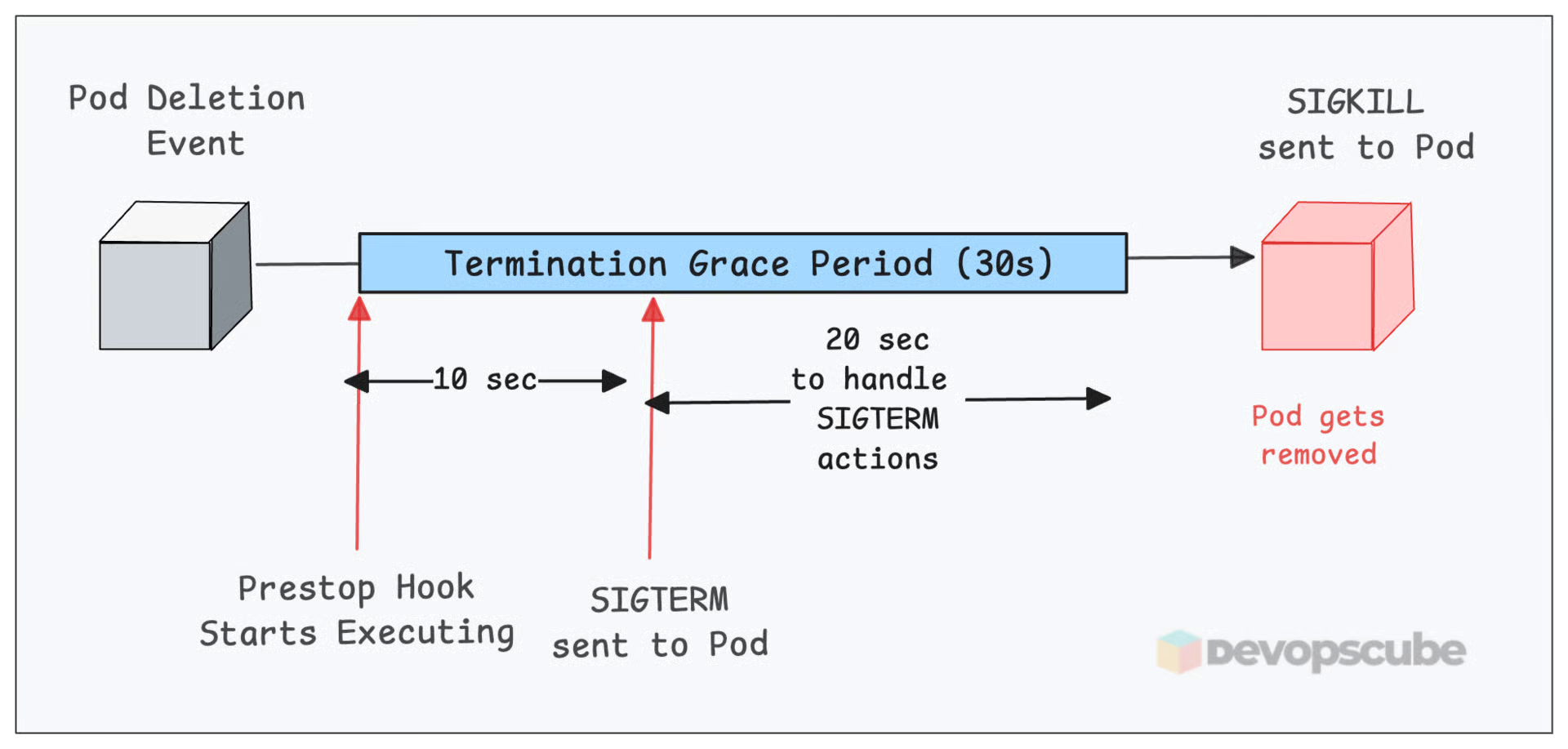
Kubernetes preStop Lifecycle Kubernetes Pod Termination Lifecycle

Pod Termination Sequence

1
2
3
4
5
6
7
8
9
10
1. kubectl delete pod
   ↓
2. Pod status: Terminating
   ↓
3. preStop hook çalıştırılır (paralel)
4. SIGTERM gönderilir (paralel)
   ↓
5. terminationGracePeriodSeconds bekle (default 30s)
   ↓
6. Hala canlıysa SIGKILL gönder

Kubernetes Deployment with preStop

1
2
3
4
5
6
7
8
9
10
11
12
13
14
15
16
17
18
19
20
21
22
23
24
25
26
27
28
29
30
31
32
33
34
35
36
37
38
39
40
41
42
43
44
45
46
47
48
49
apiVersion: apps/v1
kind: Deployment
metadata:
  name: fastapi-app
spec:
  replicas: 3
  template:
    spec:
      containers:
      - name: app
        image: myapp:latest
        ports:
        - containerPort: 8000
        
        # Liveness probe (pod sağlıklı mı?)
        livenessProbe:
          httpGet:
            path: /health
            port: 8000
          initialDelaySeconds: 10
          periodSeconds: 5
        
        # Readiness probe (trafik alabilir mi?)
        readinessProbe:
          httpGet:
            path: /ready
            port: 8000
          initialDelaySeconds: 5
          periodSeconds: 3
        
        # preStop hook
        lifecycle:
          preStop:
            exec:
              command:
              - /bin/sh
              - -c
              - |
                # Health check'i fail et (trafik gelmesin)
                touch /tmp/shutting-down
                
                # Load balancer'ın bunu fark etmesi için bekle
                sleep 10
                
                # Graceful shutdown trigger
                kill -TERM 1
      
      # Graceful termination period
      terminationGracePeriodSeconds: 60

Health Check Implementation

1
2
3
4
5
6
7
8
9
10
11
12
13
14
15
16
17
18
19
20
21
22
23
24
25
26
27
28
29
30
31
32
33
34
35
from fastapi import FastAPI
from pathlib import Path

app = FastAPI()

SHUTDOWN_FILE = Path("/tmp/shutting-down")

@app.get("/health")
async def health():
    """Liveness probe - pod canlı mı?"""
    return {"status": "alive"}

@app.get("/ready")
async def readiness():
    """Readiness probe - trafik alabilir mi?"""
    if SHUTDOWN_FILE.exists():
        return {"status": "not_ready"}, 503
    
    # Check dependencies
    if not db.is_connected():
        return {"status": "not_ready", "reason": "db_down"}, 503
    
    return {"status": "ready"}

@app.on_event("shutdown")
async def shutdown():
    """Graceful shutdown"""
    # Create shutdown file
    SHUTDOWN_FILE.touch()
    
    print("⏳ Waiting for ongoing requests...")
    await asyncio.sleep(5)
    
    print("🧹 Cleanup...")
    # Close connections

Pod Graceful Shutdown Diagram

Pod Graceful Shutdown Kubernetes Pod Zarif Kapanış Süreci

8. Systemd Integration

Systemd Service File

1
2
3
4
5
6
7
8
9
10
11
12
13
14
15
16
17
18
19
20
21
22
23
24
25
26
27
28
29
30
31
32
33
34
35
36
37
38
39
# /etc/systemd/system/myapp.service
[Unit]
Description=My FastAPI Application
After=network.target redis.service postgresql.service
Wants=redis.service postgresql.service

[Service]
Type=notify
User=appuser
Group=appuser
WorkingDirectory=/opt/myapp

# Environment
Environment="PYTHONUNBUFFERED=1"
Environment="CONFIG_FILE=/etc/myapp/config.yaml"

# Start command
ExecStart=/opt/myapp/venv/bin/python -m uvicorn app.main:app --host 0.0.0.0 --port 8000

# Graceful reload (SIGHUP)
ExecReload=/bin/kill -HUP $MAINPID

# Graceful stop (SIGTERM)
KillMode=mixed
KillSignal=SIGTERM
TimeoutStopSec=60
SendSIGKILL=yes

# Restart policy
Restart=always
RestartSec=10

# Logging
StandardOutput=journal
StandardError=journal
SyslogIdentifier=myapp

[Install]
WantedBy=multi-user.target

Systemd Notify Support

1
2
3
4
5
6
7
8
9
10
11
12
13
14
15
16
17
18
19
20
21
22
23
24
25
26
27
28
29
30
31
32
33
34
import sys
import socket

def notify_systemd(message: str):
    """Send notification to systemd"""
    notify_socket = os.getenv('NOTIFY_SOCKET')
    
    if not notify_socket:
        return  # Not running under systemd
    
    sock = socket.socket(socket.AF_UNIX, socket.SOCK_DGRAM)
    
    try:
        sock.sendto(message.encode(), notify_socket)
    finally:
        sock.close()

# Application startup
notify_systemd("READY=1")
notify_systemd("STATUS=Application started")

# During shutdown
notify_systemd("STOPPING=1")
notify_systemd("STATUS=Shutting down gracefully")

# On reload
signal.signal(signal.SIGHUP, reload_config)

def reload_config(signum, frame):
    """Reload configuration on SIGHUP"""
    print("🔄 Configuration reloading...")
    load_config()
    notify_systemd("RELOADING=1")
    notify_systemd("STATUS=Configuration reloaded")

Systemd Commands

1
2
3
4
5
6
7
8
9
10
11
12
# Service kontrol
sudo systemctl start myapp
sudo systemctl stop myapp          # SIGTERM gönderir
sudo systemctl reload myapp        # SIGHUP gönderir
sudo systemctl restart myapp

# Status kontrolü
sudo systemctl status myapp
sudo journalctl -u myapp -f        # Logs

# Enable on boot
sudo systemctl enable myapp

9. AsyncIO Cleanup

AsyncIO Signal Handling

1
2
3
4
5
6
7
8
9
10
11
12
13
14
15
16
17
18
19
20
21
22
23
24
25
26
27
28
29
30
31
32
33
34
35
36
37
38
39
40
41
42
43
44
45
46
47
48
49
50
51
52
53
54
55
56
57
58
59
60
61
62
63
64
65
66
67
68
69
70
71
72
73
74
75
76
77
78
79
80
81
82
83
84
85
86
87
88
89
90
91
92
93
94
95
96
97
98
99
100
101
102
103
104
105
106
107
import asyncio
import signal
from typing import Set

class AsyncApplication:
    """AsyncIO application with graceful shutdown"""
    
    def __init__(self):
        self.is_shutting_down = False
        self.background_tasks: Set[asyncio.Task] = set()
        self.cleanup_callbacks = []
    
    def add_cleanup(self, coro):
        """Register cleanup coroutine"""
        self.cleanup_callbacks.append(coro)
    
    async def start_background_task(self, coro):
        """Start background task with tracking"""
        task = asyncio.create_task(coro)
        self.background_tasks.add(task)
        task.add_done_callback(self.background_tasks.discard)
        return task
    
    async def shutdown(self):
        """Graceful shutdown"""
        if self.is_shutting_down:
            return
        
        self.is_shutting_down = True
        print("\n🛑 Shutdown başlıyor...")
        
        # Cancel background tasks
        print(f"🚫 {len(self.background_tasks)} background task iptal ediliyor...")
        for task in self.background_tasks:
            task.cancel()
        
        # Wait for tasks to finish
        await asyncio.gather(*self.background_tasks, return_exceptions=True)
        
        # Run cleanup callbacks
        print("🧹 Cleanup yapılıyor...")
        for callback in self.cleanup_callbacks:
            try:
                await callback()
            except Exception as e:
                print(f"❌ Cleanup error: {e}")
        
        print("✅ Shutdown tamamlandı")
    
    def setup_signal_handlers(self):
        """Setup signal handlers for graceful shutdown"""
        loop = asyncio.get_event_loop()
        
        for sig in (signal.SIGTERM, signal.SIGINT):
            loop.add_signal_handler(
                sig,
                lambda s=sig: asyncio.create_task(self._handle_signal(s))
            )
    
    async def _handle_signal(self, sig):
        """Handle shutdown signal"""
        print(f"\n🛑 Signal {sig} alındı")
        await self.shutdown()
        asyncio.get_event_loop().stop()

# Kullanım
async def worker_task(app: AsyncApplication):
    """Background worker"""
    try:
        while not app.is_shutting_down:
            print("💼 Worker çalışıyor...")
            await asyncio.sleep(2)
    except asyncio.CancelledError:
        print("⚠️ Worker cancelled")
        raise

async def cleanup_database():
    """Cleanup callback"""
    print("📦 Database cleanup...")
    await asyncio.sleep(0.5)

async def cleanup_cache():
    """Cleanup callback"""
    print("💾 Cache cleanup...")
    await asyncio.sleep(0.5)

async def main():
    app = AsyncApplication()
    app.setup_signal_handlers()
    
    # Register cleanup
    app.add_cleanup(cleanup_database)
    app.add_cleanup(cleanup_cache)
    
    # Start background tasks
    await app.start_background_task(worker_task(app))
    await app.start_background_task(worker_task(app))
    
    # Run until shutdown
    try:
        while not app.is_shutting_down:
            await asyncio.sleep(1)
    except KeyboardInterrupt:
        await app.shutdown()

if __name__ == '__main__':
    asyncio.run(main())

TaskGroup with Cleanup (Python 3.11+)

1
2
3
4
5
6
7
8
9
10
11
12
13
14
15
16
17
18
19
20
21
22
23
24
25
26
27
28
29
30
31
import asyncio

async def worker(name: str):
    """Worker task"""
    try:
        while True:
            print(f"Worker {name} running")
            await asyncio.sleep(1)
    except asyncio.CancelledError:
        print(f"Worker {name} cancelled, cleaning up...")
        # Cleanup logic
        await asyncio.sleep(0.5)
        print(f"Worker {name} cleanup done")
        raise

async def main():
    try:
        async with asyncio.TaskGroup() as tg:
            # All tasks will be cancelled together on shutdown
            tg.create_task(worker("A"))
            tg.create_task(worker("B"))
            tg.create_task(worker("C"))
    
    except* asyncio.CancelledError:
        print("All workers cancelled")

if __name__ == '__main__':
    try:
        asyncio.run(main())
    except KeyboardInterrupt:
        print("\n✅ Graceful shutdown")

10. Testing Graceful Shutdown

Unit Test

1
2
3
4
5
6
7
8
9
10
11
12
13
14
15
16
17
18
19
20
21
22
23
24
25
26
27
28
29
30
31
32
33
34
35
36
37
38
39
40
41
import asyncio
import signal
import pytest
from unittest.mock import MagicMock, patch

@pytest.mark.asyncio
async def test_graceful_shutdown():
    """Test graceful shutdown behavior"""
    app = AsyncApplication()
    
    # Mock cleanup
    cleanup_called = False
    
    async def mock_cleanup():
        nonlocal cleanup_called
        cleanup_called = True
    
    app.add_cleanup(mock_cleanup)
    
    # Trigger shutdown
    await app.shutdown()
    
    # Assertions
    assert app.is_shutting_down is True
    assert cleanup_called is True

def test_signal_handler():
    """Test signal handler registration"""
    shutdown_called = False
    
    def handler(signum, frame):
        nonlocal shutdown_called
        shutdown_called = True
    
    signal.signal(signal.SIGTERM, handler)
    
    # Send signal to self
    os.kill(os.getpid(), signal.SIGTERM)
    
    time.sleep(0.1)
    assert shutdown_called is True

Integration Test

1
2
3
4
5
6
7
8
9
10
11
12
13
14
15
16
17
18
19
20
21
22
23
24
25
26
27
28
29
30
31
import subprocess
import time
import requests

def test_graceful_shutdown_integration():
    """Test graceful shutdown in real process"""
    
    # Start application
    proc = subprocess.Popen(
        ['python', 'app.py'],
        stdout=subprocess.PIPE,
        stderr=subprocess.PIPE,
    )
    
    # Wait for startup
    time.sleep(2)
    
    # Verify app is running
    response = requests.get('http://localhost:8000/health')
    assert response.status_code == 200
    
    # Send SIGTERM
    proc.send_signal(signal.SIGTERM)
    
    # Wait for graceful shutdown
    try:
        proc.wait(timeout=10)
        assert proc.returncode == 0  # Clean exit
    except subprocess.TimeoutExpired:
        proc.kill()  # Force kill if hung
        pytest.fail("Graceful shutdown timeout")

11. Production Best Practices

Checklist

1
2
3
4
5
6
7
8
9
10
11
12
13
14
15
16
17
18
19
20
21
22
23
24
25
26
27
28
29
30
 Signal Handling
- [ ] SIGTERM handler implement edildi
- [ ] SIGINT handler implement edildi
- [ ] Timeout mechanism var (max 30-60s)
- [ ] Double SIGTERM için protection var

 Resource Cleanup
- [ ] Database connection'lar kapatılıyor
- [ ] Cache flush ediliyor
- [ ] File descriptor'lar kapatılıyor
- [ ] Temp dosyalar siliniyor
- [ ] Background task'lar cancel ediliyor

✅ Request Handling
- [ ] Yeni request'ler reject ediliyor
- [ ] Mevcut request'ler tamamlanıyor
- [ ] Health check fail oluyor (load balancer için)
- [ ] Request counter/tracking var

✅ Container/K8s
- [ ] preStop hook tanımlı
- [ ] terminationGracePeriodSeconds yeterli (30-60s)
- [ ] Readiness probe var
- [ ] Liveness probe var

✅ Monitoring
- [ ] Shutdown event'leri loglaniyor
- [ ] Metrics export ediliyor
- [ ] Alert sistemi var
- [ ] Graceful shutdown süresi ölçülüyor

Production Template

1
2
3
4
5
6
7
8
9
10
11
12
13
14
15
16
17
18
19
20
21
22
23
24
25
26
27
28
29
30
31
32
33
34
35
36
37
38
39
40
41
42
43
44
45
46
47
48
49
50
51
52
53
54
55
56
57
58
59
60
61
62
63
64
65
66
67
68
69
70
71
72
73
74
75
76
77
78
79
80
81
82
83
84
85
86
87
88
89
90
91
92
93
94
95
96
97
98
99
100
101
102
103
104
105
106
107
108
import asyncio
import signal
import logging
from typing import List, Callable
from pathlib import Path

logger = logging.getLogger(__name__)

class ProductionApp:
    """Production-ready application with graceful shutdown"""
    
    def __init__(self, shutdown_timeout: int = 30):
        self.shutdown_timeout = shutdown_timeout
        self.is_shutting_down = False
        self.shutdown_event = asyncio.Event()
        self.cleanup_handlers: List[Callable] = []
        
        # Shutdown marker for K8s
        self.shutdown_marker = Path("/tmp/shutting-down")
    
    def register_cleanup(self, handler: Callable):
        """Register cleanup handler"""
        self.cleanup_handlers.append(handler)
    
    def setup_signals(self):
        """Setup signal handlers"""
        loop = asyncio.get_event_loop()
        
        for sig in (signal.SIGTERM, signal.SIGINT):
            loop.add_signal_handler(
                sig,
                lambda s=sig: asyncio.create_task(self.shutdown(s))
            )
        
        logger.info("Signal handlers registered")
    
    async def shutdown(self, sig=None):
        """Graceful shutdown"""
        if self.is_shutting_down:
            logger.warning("Already shutting down, ignoring signal")
            return
        
        self.is_shutting_down = True
        logger.info(f"Shutdown initiated (signal={sig})")
        
        # Create shutdown marker
        self.shutdown_marker.touch()
        
        # Wait for inflight requests
        logger.info("Waiting for inflight requests...")
        try:
            await asyncio.wait_for(
                self.wait_for_requests(),
                timeout=self.shutdown_timeout
            )
        except asyncio.TimeoutError:
            logger.warning(f"Shutdown timeout after {self.shutdown_timeout}s")
        
        # Run cleanup handlers
        logger.info(f"Running {len(self.cleanup_handlers)} cleanup handlers")
        for handler in self.cleanup_handlers:
            try:
                if asyncio.iscoroutinefunction(handler):
                    await handler()
                else:
                    handler()
            except Exception as e:
                logger.error(f"Cleanup handler error: {e}")
        
        logger.info("Graceful shutdown complete")
        self.shutdown_event.set()
    
    async def wait_for_requests(self):
        """Wait for requests to complete"""
        # Implement your request tracking logic
        await asyncio.sleep(1)
    
    async def run(self):
        """Run application"""
        self.setup_signals()
        
        logger.info("Application started")
        
        # Your application logic here
        await self.shutdown_event.wait()
        
        logger.info("Application stopped")

# Usage
async def main():
    app = ProductionApp(shutdown_timeout=30)
    
    # Register cleanup
    @app.register_cleanup
    async def cleanup_db():
        logger.info("Closing database connections")
        # await db.close()
    
    @app.register_cleanup
    async def cleanup_cache():
        logger.info("Flushing cache")
        # await cache.flush()
    
    await app.run()

if __name__ == '__main__':
    logging.basicConfig(level=logging.INFO)
    asyncio.run(main())

Sonuç

Graceful shutdown, production uygulamalarının olmazsa olmaz bir özelliğidir. Doğru implement edildiğinde:

Zero downtime deployments sağlar
Data loss önler
Resource leaks engeller
User experience iyileştirir
Debugging kolaylaşır

###핵심 Prensipler

  1. SIGTERM’i yakala, SIGKILL’e güvenme
  2. Timeout uygula, sonsuz beklemeler
  3. Health check’leri fail et, yeni trafik gelmesin
  4. Mevcut işleri bitir, yenilerini reddet
  5. Resource’ları temizle, connection, file, cache
  6. Test et, production’da sürprizle karşılaşma

Modern container ve orchestration platformlarında (Docker, Kubernetes), graceful shutdown doğru çalıştığında deploy süreçleri sorunsuz ilerler ve kullanıcı kesintisi yaşanmaz.

Kaynaklar

Bu gönderi CC BY 4.0 lisansı altındadır.