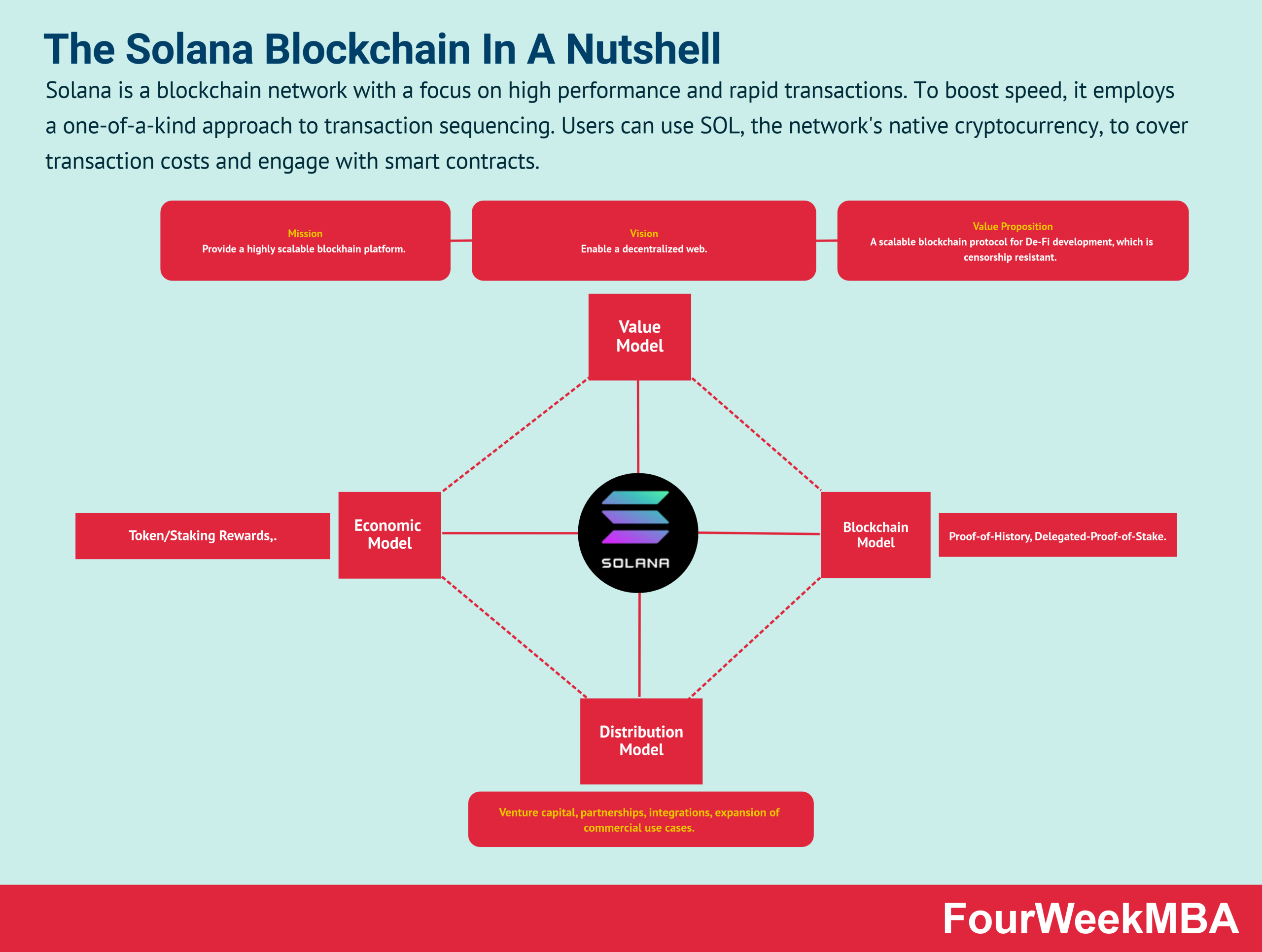
Understanding Solana's Proof of History: A Revolutionary Consensus Mechanism
Deep dive into Solana's Proof of History consensus mechanism. How PoH enables 65,000 TPS, validator operations, and Solana's unique architecture.
Introduction
Solana has emerged as one of the fastest blockchains in the cryptocurrency ecosystem, capable of processing thousands of transactions per second. At the heart of this remarkable performance lies an innovative consensus mechanism called Proof of History (PoH). Unlike traditional consensus algorithms, PoH introduces a novel approach to ordering events and maintaining time across a distributed network.
In this comprehensive guide, we’ll explore how Proof of History works, why it’s revolutionary, and how it enables Solana to achieve unprecedented scalability without sacrificing security or decentralization.
The Problem with Traditional Consensus
Time in Distributed Systems
One of the fundamental challenges in blockchain technology is establishing a reliable sense of time across a distributed network. Traditional blockchains like Bitcoin and Ethereum rely on consensus mechanisms (Proof of Work and Proof of Stake) where nodes must agree on the order of transactions through a process that can be slow and resource-intensive.
Key challenges include:
- Network Latency: Messages between nodes take time to propagate
- Clock Synchronization: Different nodes may have slightly different system clocks
- Byzantine Fault Tolerance: Some nodes may be malicious or faulty
- Ordering Events: Determining which transaction came first without a trusted timekeeper
Traditional Solutions
Proof of Work (PoW): Bitcoin’s approach uses computational puzzles to create time intervals (blocks). Miners compete to solve these puzzles, and the winner gets to add the next block. This is secure but slow (~10 minutes per block) and energy-intensive.
Proof of Stake (PoS): Ethereum 2.0 and others use validators selected based on their stake. While more efficient than PoW, traditional PoS implementations still require multiple rounds of communication between validators to achieve consensus.
Practical Byzantine Fault Tolerance (PBFT): Used in many permissioned blockchains, PBFT requires validators to exchange messages in multiple rounds, limiting scalability to a relatively small number of validators.
What is Proof of History?
Proof of History is not a consensus mechanism by itself—it’s a cryptographic clock that enables nodes to agree on the time and order of events without having to communicate extensively with each other. Think of it as a historical record that proves that an event occurred at a specific moment in time.
The Core Concept
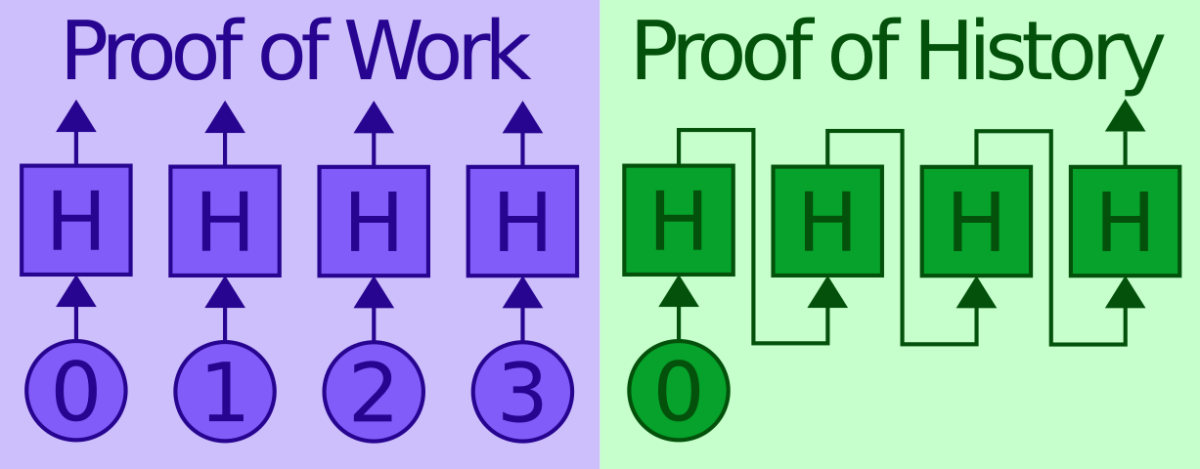
PoH creates a verifiable sequence of events by using a cryptographic function that takes the output of one computation as the input for the next. This creates a chain of computations that can only be produced sequentially, providing a built-in timestamp for each event.
The key insight: If you can prove that event B happened after event A by showing that the computation for B depended on the output of A, you’ve established a temporal ordering without needing trusted timestamps or extensive communication.
How Proof of History Works
Verifiable Delay Function (VDF)
At the core of PoH is a sequential hashing process similar to a Verifiable Delay Function:
1
2
3
4
5
6
7
8
9
10
11
12
13
14
15
16
17
18
19
20
21
22
23
24
25
26
27
28
29
30
31
32
33
34
35
36
37
38
39
40
41
42
import hashlib
import time
def proof_of_history(data, previous_hash, count):
"""
Creates a PoH hash that proves time has passed
Args:
data: The data to timestamp
previous_hash: The previous PoH hash
count: The sequence number
Returns:
New hash proving the sequence
"""
current_hash = previous_hash
# Sequential hashing that takes time
for i in range(count):
current_hash = hashlib.sha256(current_hash.encode()).hexdigest()
# Include the data at this point in time
timestamp_hash = hashlib.sha256(
f"{current_hash}{data}".encode()
).hexdigest()
return timestamp_hash, count
# Example usage
previous = "genesis_hash"
events = ["transaction1", "transaction2", "transaction3"]
print("Proof of History Sequence:")
print("-" * 60)
for idx, event in enumerate(events):
new_hash, sequence = proof_of_history(event, previous, 1000)
print(f"Event: {event}")
print(f"Sequence: {sequence}")
print(f"Hash: {new_hash[:16]}...")
print("-" * 60)
previous = new_hash
The PoH Process
- Sequential Hashing: A designated leader continuously performs SHA-256 hashing, where each output becomes the input for the next hash:
1 2 3 4
hash1 = SHA256("seed") hash2 = SHA256(hash1) hash3 = SHA256(hash2) ... - Event Recording: When transactions arrive, they are mixed into the hash sequence:
1 2 3
hash_n = SHA256(hash_n-1) hash_n+1 = SHA256(hash_n + transaction_data) hash_n+2 = SHA256(hash_n+1)
- Verification: Validators can verify the sequence by recomputing the hashes. Since hashing is sequential, it’s impossible to generate the sequence faster than the leader did, proving time has passed.
PoH Data Structure
1
2
3
4
5
6
7
8
9
10
11
12
13
14
15
16
17
18
19
20
21
22
23
24
25
26
27
28
29
30
31
32
33
34
35
36
37
38
39
40
41
42
43
44
45
46
47
48
49
50
51
52
53
54
55
56
57
58
59
60
61
62
63
64
65
66
67
68
69
70
71
72
73
74
75
76
77
78
79
80
81
82
83
84
85
86
87
88
89
90
91
92
93
94
95
96
class ProofOfHistoryEntry:
"""Represents a single entry in the PoH sequence"""
def __init__(self, prev_hash, data, sequence_number):
self.prev_hash = prev_hash
self.data = data
self.sequence_number = sequence_number
self.hash = self.compute_hash()
self.timestamp = time.time()
def compute_hash(self):
"""Compute the PoH hash for this entry"""
content = f"{self.prev_hash}{self.sequence_number}{self.data}"
return hashlib.sha256(content.encode()).hexdigest()
def verify(self, prev_entry):
"""Verify this entry is valid given the previous entry"""
if prev_entry is None:
return True # Genesis entry
# Check sequence continuity
if self.sequence_number != prev_entry.sequence_number + 1:
return False
# Check hash chain
if self.prev_hash != prev_entry.hash:
return False
# Verify hash computation
return self.hash == self.compute_hash()
class ProofOfHistoryChain:
"""A chain of PoH entries"""
def __init__(self):
self.entries = []
self.current_sequence = 0
def append(self, data):
"""Add a new entry to the PoH chain"""
prev_hash = self.entries[-1].hash if self.entries else "genesis"
entry = ProofOfHistoryEntry(prev_hash, data, self.current_sequence)
# Verify before adding
if self.verify_entry(entry):
self.entries.append(entry)
self.current_sequence += 1
return entry
return None
def verify_entry(self, entry):
"""Verify a new entry is valid"""
if not self.entries:
return True # First entry
return entry.verify(self.entries[-1])
def verify_chain(self):
"""Verify the entire chain"""
for i in range(1, len(self.entries)):
if not self.entries[i].verify(self.entries[i-1]):
return False
return True
def get_time_between(self, idx1, idx2):
"""Get the number of hashes between two entries"""
if idx1 >= idx2 or idx2 >= len(self.entries):
return 0
return self.entries[idx2].sequence_number - self.entries[idx1].sequence_number
# Example: Creating a PoH chain
poh_chain = ProofOfHistoryChain()
# Add some events
events = [
"Alice sends 10 SOL to Bob",
"Bob sends 5 SOL to Charlie",
"Charlie stakes 20 SOL",
"Alice creates NFT"
]
print("Building Proof of History Chain:")
print("=" * 70)
for event in events:
entry = poh_chain.append(event)
if entry:
print(f"\nSequence: {entry.sequence_number}")
print(f"Event: {event}")
print(f"Hash: {entry.hash[:32]}...")
print(f"Timestamp: {entry.timestamp}")
print("\n" + "=" * 70)
print(f"Chain Valid: {poh_chain.verify_chain()}")
print(f"Total Entries: {len(poh_chain.entries)}")
PoH Combined with Proof of Stake
While PoH provides a cryptographic clock, Solana combines it with Proof of Stake for consensus:
Solana’s complete blockchain architecture showing how PoH integrates with other components
Tower BFT
Solana uses a PoH-optimized version of PBFT called Tower BFT:
- Validators use the PoH sequence as a source of truth for time
- Voting happens on forks of the PoH chain
- Timeouts are based on the number of PoH ticks rather than wall-clock time
- Slashing penalizes validators who vote incorrectly
1
2
3
4
5
6
7
8
9
10
11
12
13
14
15
16
17
18
19
20
21
22
23
24
25
26
27
28
29
30
31
32
33
34
35
36
37
38
39
40
41
42
43
44
45
46
47
48
49
50
51
52
53
54
55
56
57
58
59
60
61
62
63
64
65
66
67
68
69
70
71
72
73
74
75
76
77
class TowerBFTValidator:
"""Simplified Tower BFT validator"""
def __init__(self, stake, validator_id):
self.stake = stake
self.validator_id = validator_id
self.votes = []
self.lockout_duration = {}
def vote(self, slot, poh_hash):
"""
Vote on a slot using Tower BFT rules
Args:
slot: The slot number to vote on
poh_hash: The PoH hash at this slot
"""
# Each vote doubles the lockout duration
lockout = 2 ** len(self.votes)
vote = {
'slot': slot,
'poh_hash': poh_hash,
'lockout': lockout,
'timestamp': time.time()
}
self.votes.append(vote)
self.lockout_duration[slot] = lockout
return vote
def can_vote_on_fork(self, slot):
"""
Check if validator can vote on a different fork
Uses exponential lockout
"""
for vote in reversed(self.votes):
if vote['slot'] + vote['lockout'] > slot:
return False
return True
def get_locked_out_slots(self, current_slot):
"""Get slots this validator is locked out from"""
locked = []
for vote in self.votes:
lockout_end = vote['slot'] + vote['lockout']
if lockout_end > current_slot:
locked.append({
'slot': vote['slot'],
'locked_until': lockout_end
})
return locked
# Example validator behavior
validator = TowerBFTValidator(stake=10000, validator_id="V1")
print("Tower BFT Voting Example:")
print("=" * 70)
slots = [100, 101, 102, 103]
for slot in slots:
poh_hash = hashlib.sha256(f"slot_{slot}".encode()).hexdigest()
vote = validator.vote(slot, poh_hash)
print(f"\nSlot {slot}:")
print(f" Vote Hash: {vote['poh_hash'][:16]}...")
print(f" Lockout Duration: {vote['lockout']} slots")
print(f" Locked out until slot: {slot + vote['lockout']}")
print("\n" + "=" * 70)
current_slot = 104
locked_slots = validator.get_locked_out_slots(current_slot)
print(f"\nAt slot {current_slot}, validator is locked out from:")
for lock in locked_slots:
print(f" Slot {lock['slot']} (until slot {lock['locked_until']})")
Leader Schedule
Solana uses a rotating leader schedule:
1
2
3
4
5
6
7
8
9
10
11
12
13
14
15
16
17
18
19
20
21
22
23
24
25
26
27
28
29
30
31
32
33
34
35
36
37
38
39
40
41
42
43
44
45
46
47
48
49
50
51
52
53
54
55
56
57
58
59
60
61
62
63
64
65
66
67
68
69
import random
class LeaderSchedule:
"""Manages the leader schedule for Solana"""
def __init__(self, validators, epoch_length=432000):
"""
Args:
validators: List of validator objects with stake
epoch_length: Number of slots per epoch
"""
self.validators = validators
self.epoch_length = epoch_length
self.schedule = self.generate_schedule()
def generate_schedule(self):
"""Generate leader schedule based on stake weight"""
total_stake = sum(v.stake for v in self.validators)
schedule = []
# Each validator gets slots proportional to their stake
for validator in self.validators:
stake_proportion = validator.stake / total_stake
num_slots = int(stake_proportion * self.epoch_length)
schedule.extend([validator.validator_id] * num_slots)
# Shuffle for randomness (using VRF in production)
random.shuffle(schedule)
# Pad to epoch length
while len(schedule) < self.epoch_length:
schedule.append(random.choice(self.validators).validator_id)
return schedule[:self.epoch_length]
def get_leader(self, slot):
"""Get the leader for a specific slot"""
return self.schedule[slot % self.epoch_length]
def get_leader_slots(self, validator_id):
"""Get all slots where a validator is the leader"""
return [i for i, v in enumerate(self.schedule) if v == validator_id]
# Example: Create a leader schedule
validators = [
TowerBFTValidator(stake=50000, validator_id="Validator_A"),
TowerBFTValidator(stake=30000, validator_id="Validator_B"),
TowerBFTValidator(stake=20000, validator_id="Validator_C"),
]
schedule = LeaderSchedule(validators, epoch_length=1000)
print("Leader Schedule Example:")
print("=" * 70)
for validator in validators:
slots = schedule.get_leader_slots(validator.validator_id)
percentage = (len(slots) / 1000) * 100
print(f"\n{validator.validator_id}:")
print(f" Stake: {validator.stake:,} SOL")
print(f" Leader Slots: {len(slots)}")
print(f" Percentage: {percentage:.1f}%")
print("\n" + "=" * 70)
print("\nNext 10 slots:")
for slot in range(10):
leader = schedule.get_leader(slot)
print(f" Slot {slot}: {leader}")
Advantages of Proof of History
1. High Throughput
By eliminating the need for extensive communication about time and ordering, Solana can process transactions in parallel:
- 50,000+ TPS in optimal conditions
- 400ms block times (compared to 10-15 seconds for Ethereum)
- Sub-second finality in most cases
2. Lower Latency
Validators don’t need to wait for network-wide consensus on every transaction:
1
2
3
4
5
6
7
8
9
10
11
12
13
14
15
16
17
18
19
20
21
22
23
24
25
26
27
28
29
30
31
32
33
34
35
36
37
38
39
def compare_latency():
"""Compare transaction latency across blockchains"""
blockchains = {
"Bitcoin": {
"block_time": 600, # 10 minutes
"confirmations": 6,
"total_time": 3600 # 1 hour
},
"Ethereum": {
"block_time": 12,
"confirmations": 25,
"total_time": 300 # 5 minutes
},
"Solana": {
"block_time": 0.4,
"confirmations": 32,
"total_time": 12.8 # ~13 seconds
}
}
print("Transaction Finality Comparison:")
print("=" * 70)
for chain, data in blockchains.items():
print(f"\n{chain}:")
print(f" Block Time: {data['block_time']}s")
print(f" Confirmations: {data['confirmations']}")
print(f" Total Time to Finality: {data['total_time']}s")
print(f" That's {data['total_time'] / 60:.1f} minutes")
# Calculate speedup
solana_time = blockchains['Solana']['total_time']
for chain, data in blockchains.items():
if chain != 'Solana':
speedup = data['total_time'] / solana_time
print(f"\nSolana is {speedup:.0f}x faster than {chain}")
compare_latency()
3. Energy Efficiency
Unlike PoW, PoH doesn’t require massive computational power for mining:
1
2
3
4
5
6
7
8
9
10
11
12
13
14
15
16
17
18
19
20
21
22
23
24
25
26
27
28
29
30
31
32
33
34
35
36
37
38
39
40
def calculate_energy_consumption():
"""Compare energy consumption"""
consumption = {
"Bitcoin": {
"annual_twh": 150,
"tx_per_second": 7,
"kwh_per_tx": 707
},
"Ethereum": {
"annual_twh": 100,
"tx_per_second": 30,
"kwh_per_tx": 110
},
"Solana": {
"annual_twh": 0.00051, # Much lower
"tx_per_second": 50000,
"kwh_per_tx": 0.00003
}
}
print("Energy Consumption Comparison:")
print("=" * 70)
for chain, data in consumption.items():
print(f"\n{chain}:")
print(f" Annual Consumption: {data['annual_twh']} TWh")
print(f" Transactions/sec: {data['tx_per_second']:,}")
print(f" Energy per Transaction: {data['kwh_per_tx']:.5f} kWh")
# Compare to household usage
avg_home_kwh_per_month = 877
btc_tx_in_homes = consumption['Bitcoin']['kwh_per_tx'] / avg_home_kwh_per_month
sol_tx_in_homes = consumption['Solana']['kwh_per_tx'] / avg_home_kwh_per_month
print("\n" + "=" * 70)
print(f"\n1 Bitcoin transaction uses the energy of {btc_tx_in_homes:.1f} homes for a month")
print(f"1 Solana transaction uses {sol_tx_in_homes * 100:.6f}% of 1 home's monthly energy")
calculate_energy_consumption()
4. Predictable Performance
PoH provides a consistent, measurable passage of time, making performance more predictable.
Challenges and Limitations
1. Hardware Requirements
Running a Solana validator requires significant hardware:
1
2
3
4
5
6
7
8
9
10
11
12
13
14
15
16
17
18
19
20
21
22
23
24
25
26
27
28
29
30
31
32
33
34
35
36
37
38
39
40
41
42
43
44
45
46
47
48
49
50
51
52
53
54
55
class ValidatorRequirements:
"""Minimum hardware requirements for Solana validator"""
MIN_SPECS = {
"cpu_cores": 16,
"ram_gb": 256,
"disk_tb": 2,
"network_gbps": 1,
"estimated_cost_usd": 3000
}
RECOMMENDED_SPECS = {
"cpu_cores": 32,
"ram_gb": 512,
"disk_tb": 4,
"network_gbps": 10,
"estimated_cost_usd": 10000
}
@staticmethod
def check_requirements(specs):
"""Check if specs meet minimum requirements"""
print("Validator Requirements Check:")
print("=" * 70)
meets_min = all(
specs.get(key, 0) >= ValidatorRequirements.MIN_SPECS[key]
for key in ValidatorRequirements.MIN_SPECS
if key != 'estimated_cost_usd'
)
print("\nYour Specs:")
for key, value in specs.items():
min_val = ValidatorRequirements.MIN_SPECS.get(key, "N/A")
rec_val = ValidatorRequirements.RECOMMENDED_SPECS.get(key, "N/A")
status = "✓" if value >= min_val else "✗"
print(f" {status} {key}: {value} (min: {min_val}, rec: {rec_val})")
print("\n" + "=" * 70)
if meets_min:
print("✓ Meets minimum requirements")
else:
print("✗ Does not meet minimum requirements")
return meets_min
# Example usage
my_specs = {
"cpu_cores": 24,
"ram_gb": 128,
"disk_tb": 2,
"network_gbps": 1
}
ValidatorRequirements.check_requirements(my_specs)
2. Centralization Concerns
High hardware requirements can lead to centralization:
- Only well-funded operators can run validators
- Geographic concentration in data centers
- Potential single points of failure
3. Network Stability
Solana has experienced several outages:
1
2
3
4
5
6
7
8
9
10
11
12
13
14
15
16
17
18
19
20
21
22
23
24
25
26
27
28
29
30
def analyze_network_outages():
"""Analyze Solana network outages"""
outages = [
{"date": "2021-09-14", "duration_hours": 17, "cause": "Resource exhaustion"},
{"date": "2021-12-04", "duration_hours": 7, "cause": "Excessive duplicate transactions"},
{"date": "2022-01-21", "duration_hours": 4, "cause": "Validator consensus issue"},
{"date": "2022-05-01", "duration_hours": 7, "cause": "NFT bot activity"},
]
print("Solana Network Outage History:")
print("=" * 70)
total_downtime = sum(o['duration_hours'] for o in outages)
for outage in outages:
print(f"\n{outage['date']}:")
print(f" Duration: {outage['duration_hours']} hours")
print(f" Cause: {outage['cause']}")
print("\n" + "=" * 70)
print(f"Total Downtime: {total_downtime} hours")
print(f"Average Outage: {total_downtime / len(outages):.1f} hours")
# Calculate uptime percentage (example for a year)
hours_in_year = 365 * 24
uptime_percentage = ((hours_in_year - total_downtime) / hours_in_year) * 100
print(f"Approximate Yearly Uptime: {uptime_percentage:.2f}%")
analyze_network_outages()
Real-World Applications
1. Decentralized Exchanges (DEX)
High throughput enables efficient DEX operation:
1
2
3
4
5
6
7
8
9
10
11
12
13
14
15
16
17
18
19
20
21
22
23
24
25
26
27
28
29
30
31
32
33
34
35
36
37
38
39
40
41
42
43
44
45
46
47
48
49
50
51
52
53
54
55
56
57
58
59
60
61
62
63
64
65
66
67
68
69
70
71
72
73
74
75
76
77
78
79
80
81
82
class SolanaDEX:
"""Simplified DEX leveraging Solana's speed"""
def __init__(self):
self.liquidity_pools = {}
self.recent_trades = []
def create_pool(self, token_a, token_b, amount_a, amount_b):
"""Create a liquidity pool"""
pool_id = f"{token_a}-{token_b}"
self.liquidity_pools[pool_id] = {
'token_a': token_a,
'token_b': token_b,
'reserve_a': amount_a,
'reserve_b': amount_b,
'k': amount_a * amount_b # Constant product
}
return pool_id
def swap(self, pool_id, input_token, input_amount):
"""
Execute a swap using constant product formula
Fast execution thanks to Solana's PoH
"""
pool = self.liquidity_pools.get(pool_id)
if not pool:
return None
# Determine input/output reserves
if input_token == pool['token_a']:
reserve_in = pool['reserve_a']
reserve_out = pool['reserve_b']
output_token = pool['token_b']
else:
reserve_in = pool['reserve_b']
reserve_out = pool['reserve_a']
output_token = pool['token_a']
# Calculate output using constant product formula (x * y = k)
# With 0.3% fee
input_with_fee = input_amount * 0.997
output_amount = (reserve_out * input_with_fee) / (reserve_in + input_with_fee)
# Update reserves
if input_token == pool['token_a']:
pool['reserve_a'] += input_amount
pool['reserve_b'] -= output_amount
else:
pool['reserve_b'] += input_amount
pool['reserve_a'] -= output_amount
# Record trade (fast confirmation thanks to PoH)
trade = {
'pool': pool_id,
'input_token': input_token,
'input_amount': input_amount,
'output_token': output_token,
'output_amount': output_amount,
'timestamp': time.time(),
'confirmed_in_ms': 400 # Solana block time
}
self.recent_trades.append(trade)
return trade
# Example DEX operations
dex = SolanaDEX()
# Create SOL-USDC pool
pool = dex.create_pool('SOL', 'USDC', 1000, 50000)
print(f"Created pool: {pool}")
# Execute rapid swaps (possible thanks to Solana's speed)
print("\nExecuting high-frequency swaps:")
print("=" * 70)
for i in range(5):
trade = dex.swap(pool, 'USDC', 100)
print(f"\nTrade {i+1}:")
print(f" Swapped: {trade['input_amount']} {trade['input_token']}")
print(f" Received: {trade['output_amount']:.4f} {trade['output_token']}")
print(f" Confirmed in: {trade['confirmed_in_ms']}ms")
2. NFT Marketplaces
Fast, cheap minting and trading:
1
2
3
4
5
6
7
8
9
10
11
12
13
14
15
16
17
18
19
20
21
22
23
24
25
26
27
28
29
30
31
32
33
34
35
36
37
38
39
40
41
42
43
44
45
46
47
48
49
50
51
52
53
54
55
56
57
58
59
60
61
62
63
64
65
66
67
68
69
70
71
72
73
74
75
76
77
78
79
80
81
82
83
84
85
86
87
88
89
90
91
class SolanaNFTMarketplace:
"""NFT marketplace utilizing Solana's speed"""
def __init__(self):
self.nfts = {}
self.listings = {}
self.mint_count = 0
def mint_nft(self, creator, metadata):
"""
Mint NFT with minimal cost and fast confirmation
"""
self.mint_count += 1
nft_id = f"NFT-{self.mint_count}"
nft = {
'id': nft_id,
'creator': creator,
'metadata': metadata,
'owner': creator,
'mint_timestamp': time.time(),
'transaction_cost_sol': 0.00001, # Very low cost
'confirmation_time_ms': 400
}
self.nfts[nft_id] = nft
return nft
def list_nft(self, nft_id, price):
"""List NFT for sale"""
if nft_id not in self.nfts:
return None
self.listings[nft_id] = {
'price': price,
'listed_at': time.time()
}
return self.listings[nft_id]
def buy_nft(self, nft_id, buyer):
"""Purchase NFT with fast settlement"""
if nft_id not in self.listings:
return None
nft = self.nfts[nft_id]
listing = self.listings[nft_id]
# Transfer ownership (fast thanks to PoH)
nft['owner'] = buyer
sale = {
'nft_id': nft_id,
'seller': nft['creator'],
'buyer': buyer,
'price': listing['price'],
'timestamp': time.time(),
'settlement_time_ms': 400 # Near-instant
}
# Remove listing
del self.listings[nft_id]
return sale
# Example NFT operations
marketplace = SolanaNFTMarketplace()
print("Solana NFT Marketplace Example:")
print("=" * 70)
# Mint multiple NFTs rapidly
print("\nMinting NFT collection...")
for i in range(5):
nft = marketplace.mint_nft(
creator="Artist123",
metadata={
'name': f"Cool Art #{i+1}",
'description': 'Digital artwork',
'image': f'ipfs://abc{i+1}'
}
)
print(f" Minted {nft['id']} - Cost: {nft['transaction_cost_sol']} SOL, Time: {nft['confirmation_time_ms']}ms")
# List and sell
print("\n" + "=" * 70)
print("\nListing and selling NFTs...")
marketplace.list_nft('NFT-1', 5.0)
sale = marketplace.buy_nft('NFT-1', 'Collector456')
print(f" Sold {sale['nft_id']} for {sale['price']} SOL")
print(f" Settlement time: {sale['settlement_time_ms']}ms")
Comparing PoH to Other Consensus Mechanisms
Comparison of Proof of History with traditional consensus mechanisms
1
2
3
4
5
6
7
8
9
10
11
12
13
14
15
16
17
18
19
20
21
22
23
24
25
26
27
28
29
30
31
32
33
34
35
36
37
38
39
40
41
42
43
44
45
46
47
48
49
50
51
52
53
54
55
56
57
58
59
60
61
62
63
64
65
66
67
68
69
def consensus_comparison():
"""Comprehensive comparison of consensus mechanisms"""
mechanisms = {
"Proof of Work (Bitcoin)": {
"throughput_tps": 7,
"finality_time_sec": 3600,
"energy_per_tx_kwh": 707,
"validator_cost_usd": 10000,
"decentralization": "High",
"security": "Very High"
},
"Proof of Stake (Ethereum)": {
"throughput_tps": 30,
"finality_time_sec": 384,
"energy_per_tx_kwh": 0.05,
"validator_cost_usd": 50000, # 32 ETH
"decentralization": "High",
"security": "High"
},
"Proof of History (Solana)": {
"throughput_tps": 50000,
"finality_time_sec": 13,
"energy_per_tx_kwh": 0.00003,
"validator_cost_usd": 10000,
"decentralization": "Medium",
"security": "Medium-High"
},
"Delegated PoS (EOS)": {
"throughput_tps": 4000,
"finality_time_sec": 3,
"energy_per_tx_kwh": 0.0001,
"validator_cost_usd": 5000,
"decentralization": "Low",
"security": "Medium"
}
}
print("Consensus Mechanism Comparison:")
print("=" * 100)
# Headers
print(f"\n{'Mechanism':<30} {'TPS':<10} {'Finality':<12} {'Energy/Tx':<15} {'Val Cost':<12} {'Decent':<10} {'Security':<10}")
print("-" * 100)
# Data
for name, data in mechanisms.items():
print(f"{name:<30} "
f"{data['throughput_tps']:<10} "
f"{data['finality_time_sec']:<12} "
f"{data['energy_per_tx_kwh']:<15.5f} "
f"${data['validator_cost_usd']:<11,} "
f"{data['decentralization']:<10} "
f"{data['security']:<10}")
print("\n" + "=" * 100)
# Solana advantages
sol = mechanisms["Proof of History (Solana)"]
btc = mechanisms["Proof of Work (Bitcoin)"]
eth = mechanisms["Proof of Stake (Ethereum)"]
print("\nSolana (PoH) Advantages:")
print(f" • {sol['throughput_tps'] / btc['throughput_tps']:.0f}x faster than Bitcoin")
print(f" • {sol['throughput_tps'] / eth['throughput_tps']:.0f}x faster than Ethereum")
print(f" • {btc['finality_time_sec'] / sol['finality_time_sec']:.0f}x quicker finality than Bitcoin")
print(f" • {btc['energy_per_tx_kwh'] / sol['energy_per_tx_kwh']:.0f}x more energy efficient than Bitcoin")
consensus_comparison()
Best Practices for Building on Solana
1. Optimize for Parallel Execution
1
2
3
4
5
6
7
8
9
10
11
12
13
14
15
16
17
18
19
20
21
22
23
24
25
26
27
28
29
30
31
32
33
34
35
36
37
38
39
40
# Take advantage of Solana's parallel transaction processing
class OptimizedTransaction:
"""Best practices for Solana transactions"""
@staticmethod
def prepare_parallel_transactions(operations):
"""
Prepare transactions that can execute in parallel
Key: Ensure transactions don't conflict on account access
"""
# Group operations by accounts they touch
account_groups = {}
for op in operations:
accounts = tuple(sorted(op['accounts']))
if accounts not in account_groups:
account_groups[accounts] = []
account_groups[accounts].append(op)
# Each group can be parallelized
parallel_batches = list(account_groups.values())
print("Parallel Transaction Batching:")
print("=" * 70)
print(f"Total operations: {len(operations)}")
print(f"Parallel batches: {len(parallel_batches)}")
print(f"Max parallelization: {len(operations) / len(parallel_batches):.1f}x")
return parallel_batches
# Example
operations = [
{'accounts': ['A', 'B'], 'action': 'transfer'},
{'accounts': ['C', 'D'], 'action': 'transfer'}, # Can run parallel with above
{'accounts': ['A', 'C'], 'action': 'swap'},
{'accounts': ['E', 'F'], 'action': 'transfer'}, # Can run parallel with all above
]
OptimizedTransaction.prepare_parallel_transactions(operations)
2. Handle Network Conditions
1
2
3
4
5
6
7
8
9
10
11
12
13
14
15
16
17
18
19
20
21
22
23
24
25
26
27
28
29
30
31
32
33
34
35
36
37
38
39
40
41
42
43
44
45
46
47
48
49
import time
class SolanaTransactionHandler:
"""Robust transaction handling for Solana"""
def __init__(self, max_retries=3):
self.max_retries = max_retries
def send_transaction_with_retry(self, transaction):
"""
Send transaction with automatic retry logic
Important due to occasional network congestion
"""
for attempt in range(self.max_retries):
try:
print(f"Attempt {attempt + 1}: Sending transaction...")
# Simulate transaction send
success = self._simulate_send(transaction)
if success:
print(f"✓ Transaction confirmed!")
return True
except Exception as e:
print(f"✗ Attempt {attempt + 1} failed: {e}")
if attempt < self.max_retries - 1:
# Exponential backoff
wait_time = 2 ** attempt
print(f" Waiting {wait_time}s before retry...")
time.sleep(wait_time)
print("✗ Transaction failed after all retries")
return False
def _simulate_send(self, transaction):
"""Simulate transaction send (placeholder)"""
# In real code, this would use @solana/web3.js
import random
return random.random() > 0.3 # 70% success rate
# Example usage
handler = SolanaTransactionHandler()
transaction = {'from': 'Alice', 'to': 'Bob', 'amount': 1.5}
print("Transaction Retry Example:")
print("=" * 70)
handler.send_transaction_with_retry(transaction)
3. Monitor Cluster Health
1
2
3
4
5
6
7
8
9
10
11
12
13
14
15
16
17
18
19
20
21
22
23
24
25
26
27
28
29
30
31
32
33
34
35
36
37
38
class ClusterMonitor:
"""Monitor Solana cluster health"""
def check_cluster_status(self):
"""Check various cluster health metrics"""
# Simulated metrics (in production, query RPC endpoints)
metrics = {
'tps_current': 2847,
'tps_max': 50000,
'block_time_ms': 420,
'validator_count': 1893,
'stake_active_sol': 398000000,
'cluster_version': '1.16.0'
}
print("Solana Cluster Health:")
print("=" * 70)
for key, value in metrics.items():
print(f" {key}: {value:,}" if isinstance(value, int) else f" {key}: {value}")
# Health assessment
utilization = (metrics['tps_current'] / metrics['tps_max']) * 100
print("\n" + "=" * 70)
print(f"Network Utilization: {utilization:.1f}%")
if utilization < 50:
print("Status: ✓ Optimal - Low congestion")
elif utilization < 80:
print("Status: ⚠ Moderate - Some congestion")
else:
print("Status: ✗ High - Significant congestion")
return metrics
# Example
monitor = ClusterMonitor()
monitor.check_cluster_status()
The Future of Proof of History
Upcoming Improvements
Firedancer: A new validator client being developed by Jump Crypto, expected to increase throughput to 1M+ TPS
QUIC Protocol: Better networking for improved validator communication
State Compression: Reduce storage requirements while maintaining security
Improved Light Clients: Enable mobile and browser-based validation
1
2
3
4
5
6
7
8
9
10
11
12
13
14
15
16
17
18
19
20
21
22
23
24
25
26
27
28
29
30
31
32
33
34
35
36
37
38
39
40
41
42
43
44
45
46
47
48
def project_future_performance():
"""Project Solana's future performance"""
milestones = {
"Current (2024)": {
"tps": 50000,
"block_time_ms": 400,
"validator_count": 2000,
"cost_per_tx_usd": 0.00025
},
"Firedancer (2025)": {
"tps": 1000000,
"block_time_ms": 400,
"validator_count": 3000,
"cost_per_tx_usd": 0.0001
},
"Future Optimizations (2026+)": {
"tps": 5000000,
"block_time_ms": 200,
"validator_count": 5000,
"cost_per_tx_usd": 0.00005
}
}
print("Solana Performance Roadmap:")
print("=" * 90)
print(f"\n{'Milestone':<30} {'TPS':<15} {'Block Time':<15} {'Validators':<15} {'Cost/Tx':<15}")
print("-" * 90)
for milestone, data in milestones.items():
print(f"{milestone:<30} "
f"{data['tps']:,}{' ':<10} "
f"{data['block_time_ms']}ms{' ':<10} "
f"{data['validator_count']:,}{' ':<10} "
f"${data['cost_per_tx_usd']:.5f}")
print("\n" + "=" * 90)
current = milestones["Current (2024)"]
future = milestones["Future Optimizations (2026+)"]
print("\nProjected Improvements:")
print(f" • TPS: {future['tps'] / current['tps']:.0f}x increase")
print(f" • Block Time: {current['block_time_ms'] / future['block_time_ms']:.1f}x faster")
print(f" • Transaction Cost: {current['cost_per_tx_usd'] / future['cost_per_tx_usd']:.0f}x cheaper")
project_future_performance()
Conclusion
Proof of History represents a paradigm shift in blockchain consensus mechanisms. By providing a cryptographic clock that enables nodes to agree on time and event ordering without extensive communication, Solana achieves throughput and latency that were previously thought impossible in decentralized systems.
Key Takeaways
- PoH is a clock, not consensus - It works alongside PoS to provide ordering and timing
- Sequential hashing proves time - The cryptographic chain can’t be generated faster than it was created
- Enables massive parallelization - Validators can process transactions without waiting for consensus on ordering
- Trade-offs exist - High hardware requirements and occasional stability issues
- Rapid innovation - The ecosystem is evolving quickly with significant improvements on the horizon
When to Use Solana
Solana’s PoH-based architecture is ideal for:
- High-frequency trading applications requiring minimal latency
- DeFi protocols with high transaction volumes
- NFT marketplaces needing fast, cheap minting
- Gaming applications requiring real-time interactions
- Payment systems demanding instant settlement
As blockchain technology continues to evolve, Proof of History stands as a testament to the power of innovative thinking in solving complex distributed systems problems. While it’s not without challenges, PoH has demonstrated that high-performance blockchain is not only possible but practical for real-world applications.
Additional Resources
- Solana Whitepaper
- Solana Documentation
- Anatoly Yakovenko’s Original PoH Blog Post
- Solana Beach Explorer
- Solana Validator Guide
Understanding the fundamental innovations that power modern blockchains helps developers and users make informed decisions about which platforms best suit their needs. Proof of History is one such innovation that pushes the boundaries of what’s possible in decentralized systems.