Python ile Hız Sınırlama ve API Throttling
API güvenliği için rate limiting algoritmaları. Fixed window, sliding window, token bucket, Redis distributed solutions ve FastAPI entegrasyonu.
Modern API’lerde hız sınırlama (rate limiting), sistem kaynaklarının korunması, DoS saldırılarının önlenmesi ve API kullanımının adil paylaşımı için kritik öneme sahiptir. Bu yazıda, Python ile çeşitli rate limiting algoritmalarını, Redis tabanlı distributed çözümleri ve FastAPI entegrasyonunu detaylıca inceleyeceğiz.
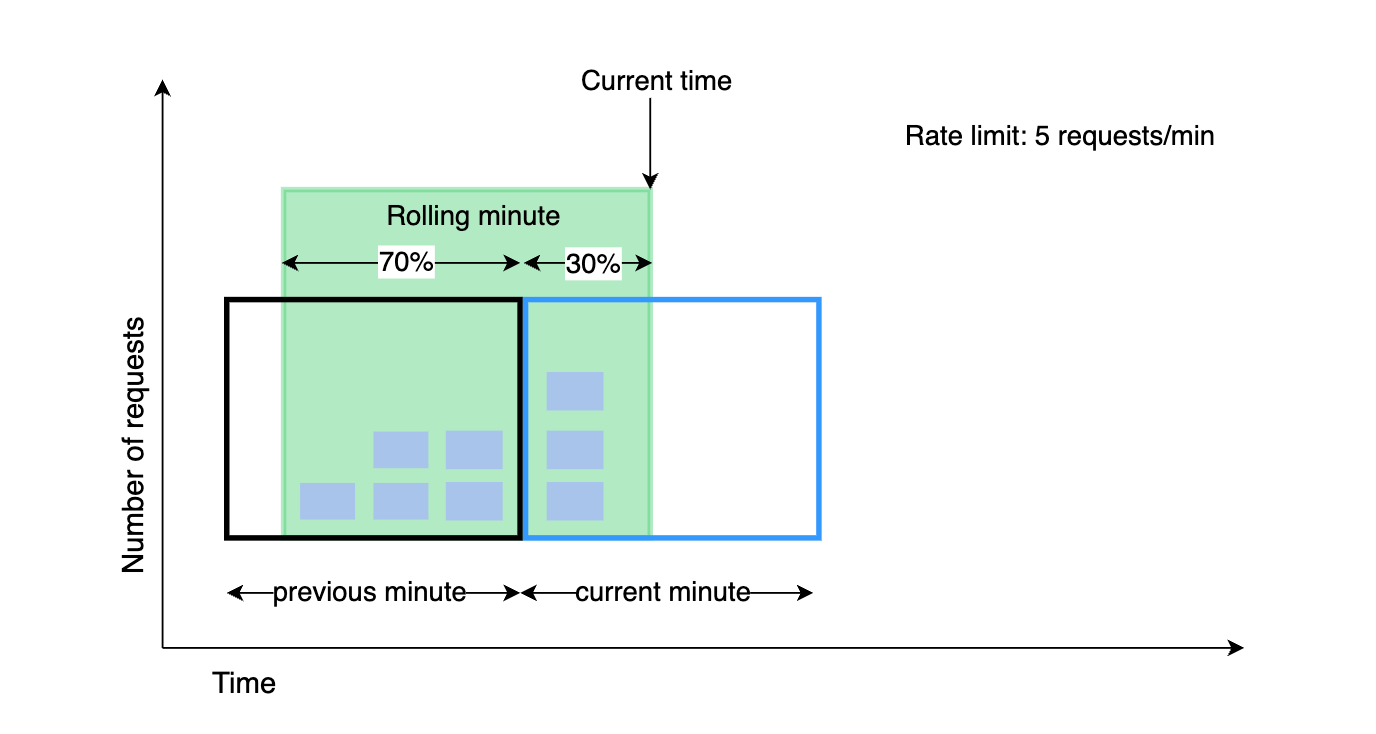
Rate Limiting Nedir?
Rate limiting, belirli bir zaman diliminde bir kullanıcının veya IP adresinin yapabileceği istek sayısını sınırlama işlemidir. Amaçlar:
- Kaynak Koruması: Server’ın aşırı yüklenmesini önleme
- DoS/DDoS Koruması: Kötü niyetli saldırıları engelleme
- API Abuse Prevention: API kötüye kullanımını önleme
- Fair Usage: Adil kaynak dağılımı
- Cost Control: Maliyetli işlemlerin kontrolü
- SLA Enforcement: Servis seviyesi anlaşmalarının uygulanması
Temel Terminoloji
1
2
3
4
5
6
7
8
9
10
11
12
13
14
15
16
# Rate Limit Kavramları
rate_limit = {
"limit": 100, # İzin verilen istek sayısı
"window": 60, # Zaman penceresi (saniye)
"remaining": 95, # Kalan istek hakkı
"reset": 1704207600, # Reset zamanı (Unix timestamp)
"retry_after": 35 # Yeniden deneme için bekleme süresi
}
# HTTP Headers
headers = {
"X-RateLimit-Limit": "100",
"X-RateLimit-Remaining": "95",
"X-RateLimit-Reset": "1704207600",
"Retry-After": "35"
}
Rate Limiting Algoritmaları
Comparison of rate limiting algorithms
1. Fixed Window Counter
En basit algoritma. Sabit zaman pencerelerinde istek sayısını sayar.
1
2
3
4
5
6
7
8
9
10
11
12
13
14
15
16
17
18
19
20
21
22
23
24
25
26
27
28
29
30
31
32
33
34
35
36
37
38
39
40
41
42
43
44
45
46
47
48
49
50
51
52
53
54
55
56
57
58
59
60
61
62
63
64
65
66
67
68
69
70
71
72
73
74
75
76
77
78
79
80
81
82
83
84
85
86
from datetime import datetime, timedelta
from collections import defaultdict
import threading
class FixedWindowRateLimiter:
"""Sabit pencere rate limiter"""
def __init__(self, limit: int, window_seconds: int):
"""
Args:
limit: Pencere başına izin verilen istek sayısı
window_seconds: Pencere boyutu (saniye)
"""
self.limit = limit
self.window_seconds = window_seconds
self.requests = defaultdict(lambda: {'count': 0, 'window_start': None})
self.lock = threading.Lock()
def allow_request(self, key: str) -> bool:
"""
İsteğe izin verilip verilmediğini kontrol et
Args:
key: Kullanıcı tanımlayıcı (user_id, IP, API key)
Returns:
İstek izin verildi mi
"""
with self.lock:
now = datetime.utcnow()
user_data = self.requests[key]
# İlk istek veya yeni pencere başlangıcı
if user_data['window_start'] is None:
user_data['window_start'] = now
user_data['count'] = 1
return True
# Pencere süresi dolmuş mu?
window_end = user_data['window_start'] + timedelta(seconds=self.window_seconds)
if now >= window_end:
# Yeni pencere başlat
user_data['window_start'] = now
user_data['count'] = 1
return True
# Mevcut pencere içinde
if user_data['count'] < self.limit:
user_data['count'] += 1
return True
return False
def get_info(self, key: str) -> dict:
"""Rate limit bilgilerini döndür"""
with self.lock:
user_data = self.requests[key]
if user_data['window_start'] is None:
return {
'limit': self.limit,
'remaining': self.limit,
'reset': None
}
window_end = user_data['window_start'] + timedelta(seconds=self.window_seconds)
remaining = max(0, self.limit - user_data['count'])
return {
'limit': self.limit,
'remaining': remaining,
'reset': int(window_end.timestamp())
}
# Kullanım
limiter = FixedWindowRateLimiter(limit=10, window_seconds=60)
# Simülasyon
for i in range(12):
user_id = "user_123"
allowed = limiter.allow_request(user_id)
info = limiter.get_info(user_id)
print(f"Request {i+1}: {'✅ Allowed' if allowed else '❌ Blocked'} - "
f"Remaining: {info['remaining']}/{info['limit']}")
Avantajları:
- Basit implementasyon
- Düşük memory kullanımı
- O(1) time complexity
Dezavantajları:
- Burst problem: Pencere sınırında 2x request mümkün
- Pencere geçişlerinde ani yük artışı
2. Sliding Window Log
Her isteğin timestamp’ini saklar, dinamik pencere kullanır.
1
2
3
4
5
6
7
8
9
10
11
12
13
14
15
16
17
18
19
20
21
22
23
24
25
26
27
28
29
30
31
32
33
34
35
36
37
38
39
40
41
42
43
44
45
46
47
48
49
50
51
52
53
54
55
56
57
58
59
60
61
62
63
64
65
66
67
68
69
70
from datetime import datetime, timedelta
import bisect
class SlidingWindowLogRateLimiter:
"""Sliding window log rate limiter"""
def __init__(self, limit: int, window_seconds: int):
self.limit = limit
self.window_seconds = window_seconds
self.requests = {} # {key: [timestamp1, timestamp2, ...]}
self.lock = threading.Lock()
def allow_request(self, key: str) -> bool:
"""İsteğe izin ver ve timestamp kaydet"""
with self.lock:
now = datetime.utcnow()
cutoff = now - timedelta(seconds=self.window_seconds)
# Kullanıcının isteklerini al
if key not in self.requests:
self.requests[key] = []
# Eski istekleri temizle
self.requests[key] = [
ts for ts in self.requests[key]
if ts > cutoff
]
# Limit kontrolü
if len(self.requests[key]) < self.limit:
self.requests[key].append(now)
return True
return False
def get_info(self, key: str) -> dict:
"""Rate limit bilgileri"""
with self.lock:
now = datetime.utcnow()
cutoff = now - timedelta(seconds=self.window_seconds)
if key not in self.requests:
return {
'limit': self.limit,
'remaining': self.limit,
'reset': int((now + timedelta(seconds=self.window_seconds)).timestamp())
}
# Güncel istekleri filtrele
recent_requests = [ts for ts in self.requests[key] if ts > cutoff]
remaining = max(0, self.limit - len(recent_requests))
# En eski isteğin expire olma zamanı
reset_time = recent_requests[0] + timedelta(seconds=self.window_seconds) if recent_requests else now
return {
'limit': self.limit,
'remaining': remaining,
'reset': int(reset_time.timestamp())
}
# Kullanım
limiter = SlidingWindowLogRateLimiter(limit=5, window_seconds=10)
import time
for i in range(7):
allowed = limiter.allow_request("user_456")
info = limiter.get_info("user_456")
print(f"Request {i+1}: {'✅' if allowed else '❌'} - Remaining: {info['remaining']}")
time.sleep(1)
Avantajları:
- Tam doğruluk
- Burst problem yok
- Esnek zaman pencereleri
Dezavantajları:
- Yüksek memory kullanımı (her timestamp saklanır)
- O(n) cleanup işlemi
3. Sliding Window Counter
Fixed window ve sliding log’un hibrit versiyonu. Memory efficient.
1
2
3
4
5
6
7
8
9
10
11
12
13
14
15
16
17
18
19
20
21
22
23
24
25
26
27
28
29
30
31
32
33
34
35
36
37
38
39
40
41
42
43
44
45
46
47
48
49
50
import math
from datetime import datetime, timedelta
class SlidingWindowCounterRateLimiter:
"""Sliding window counter (hybrid) rate limiter"""
def __init__(self, limit: int, window_seconds: int):
self.limit = limit
self.window_seconds = window_seconds
self.requests = {} # {key: {'prev_count': 0, 'prev_window_start': ts, 'curr_count': 0, 'curr_window_start': ts}}
self.lock = threading.Lock()
def allow_request(self, key: str) -> bool:
"""Weighted count ile sliding window"""
with self.lock:
now = datetime.utcnow()
if key not in self.requests:
self.requests[key] = {
'prev_count': 0,
'prev_window_start': now - timedelta(seconds=self.window_seconds),
'curr_count': 0,
'curr_window_start': now
}
data = self.requests[key]
# Yeni pencereye geçiş kontrolü
elapsed = (now - data['curr_window_start']).total_seconds()
if elapsed >= self.window_seconds:
# Pencereyi kaydır
data['prev_count'] = data['curr_count']
data['prev_window_start'] = data['curr_window_start']
data['curr_count'] = 0
data['curr_window_start'] = now
elapsed = 0
# Weighted count hesapla
# Önceki pencereden kalan kısmın ağırlığı + mevcut pencere
overlap_percentage = 1 - (elapsed / self.window_seconds)
weighted_count = (data['prev_count'] * overlap_percentage) + data['curr_count']
if weighted_count < self.limit:
data['curr_count'] += 1
return True
return False
# Kullanım
limiter = SlidingWindowCounterRateLimiter(limit=10, window_seconds=60)
Avantajları:
- Düşük memory (sadece 2 counter)
- Burst problem minimize
- O(1) complexity
Dezavantajları:
- Approximate count (tam doğru değil)
- Kenar durumlar
4. Token Bucket Algorithm
Token bucket rate limiting mechanism
Bucket’ta tokenlar birikir, her istek bir token harcar. Burst’lere izin verir.
1
2
3
4
5
6
7
8
9
10
11
12
13
14
15
16
17
18
19
20
21
22
23
24
25
26
27
28
29
30
31
32
33
34
35
36
37
38
39
40
41
42
43
44
45
46
47
48
49
50
51
52
53
54
55
56
57
58
59
60
61
62
63
64
65
66
67
68
69
70
71
72
73
74
75
76
77
78
79
80
81
82
83
84
85
86
87
88
89
90
91
import time
class TokenBucketRateLimiter:
"""Token bucket rate limiter"""
def __init__(self, capacity: int, refill_rate: float):
"""
Args:
capacity: Bucket kapasitesi (max token sayısı)
refill_rate: Saniye başına eklenecek token sayısı
"""
self.capacity = capacity
self.refill_rate = refill_rate
self.buckets = {} # {key: {'tokens': float, 'last_refill': timestamp}}
self.lock = threading.Lock()
def _refill(self, bucket: dict) -> None:
"""Bucket'ı yeniden doldur"""
now = time.time()
time_passed = now - bucket['last_refill']
# Geçen süreye göre token ekle
tokens_to_add = time_passed * self.refill_rate
bucket['tokens'] = min(self.capacity, bucket['tokens'] + tokens_to_add)
bucket['last_refill'] = now
def allow_request(self, key: str, tokens: int = 1) -> bool:
"""
İstek için token tüket
Args:
key: Kullanıcı identifier
tokens: Tüketilecek token sayısı (farklı endpoint'ler için)
Returns:
İstek kabul edildi mi
"""
with self.lock:
# Bucket oluştur
if key not in self.buckets:
self.buckets[key] = {
'tokens': self.capacity,
'last_refill': time.time()
}
bucket = self.buckets[key]
self._refill(bucket)
# Token var mı kontrol et
if bucket['tokens'] >= tokens:
bucket['tokens'] -= tokens
return True
return False
def get_info(self, key: str) -> dict:
"""Rate limit bilgileri"""
with self.lock:
if key not in self.buckets:
return {
'capacity': self.capacity,
'available_tokens': self.capacity,
'refill_rate': self.refill_rate
}
bucket = self.buckets[key]
self._refill(bucket)
return {
'capacity': self.capacity,
'available_tokens': int(bucket['tokens']),
'refill_rate': self.refill_rate
}
# Kullanım
limiter = TokenBucketRateLimiter(capacity=10, refill_rate=1.0) # 1 token/second
# Simülasyon: Burst trafiği
print("=== Burst Test ===")
for i in range(15):
allowed = limiter.allow_request("user_789")
info = limiter.get_info("user_789")
print(f"Request {i+1}: {'✅' if allowed else '❌'} - Tokens: {info['available_tokens']}/{info['capacity']}")
time.sleep(5) # 5 saniye bekle (5 token yenilenir)
print("\n=== After waiting 5 seconds ===")
for i in range(7):
allowed = limiter.allow_request("user_789")
info = limiter.get_info("user_789")
print(f"Request {i+1}: {'✅' if allowed else '❌'} - Tokens: {info['available_tokens']}/{info['capacity']}")
Avantajları:
- Burst trafiğine izin verir
- Düz işleyiş (smooth rate)
- Esnek (farklı endpoint’ler için farklı cost)
Dezavantajları:
- Floating point hesaplamalar
- Burst abuse riski
5. Leaky Bucket Algorithm
Leaky bucket constant rate output
Token bucket’ın tersi. İstekleri queue’da tutar, sabit hızda işler.
1
2
3
4
5
6
7
8
9
10
11
12
13
14
15
16
17
18
19
20
21
22
23
24
25
26
27
28
29
30
31
32
33
34
35
36
37
38
39
40
41
42
43
44
45
46
47
48
49
50
51
52
53
54
55
56
57
58
59
60
61
62
63
64
65
66
67
68
69
70
71
72
73
74
75
76
77
78
79
80
from collections import deque
import threading
import time
class LeakyBucketRateLimiter:
"""Leaky bucket rate limiter with queue"""
def __init__(self, capacity: int, leak_rate: float):
"""
Args:
capacity: Queue kapasitesi (max request sayısı)
leak_rate: Saniye başına işlenecek request sayısı
"""
self.capacity = capacity
self.leak_rate = leak_rate
self.buckets = {} # {key: {'queue': deque, 'last_leak': timestamp}}
self.lock = threading.Lock()
def _leak(self, bucket: dict) -> None:
"""Queue'dan istekleri sızdır (işle)"""
now = time.time()
time_passed = now - bucket['last_leak']
# Geçen sürede kaç request işlenebilir
leaks = int(time_passed * self.leak_rate)
if leaks > 0:
# Queue'dan request çıkar
for _ in range(min(leaks, len(bucket['queue']))):
bucket['queue'].popleft()
bucket['last_leak'] = now
def allow_request(self, key: str) -> bool:
"""İsteği queue'ya ekle"""
with self.lock:
# Bucket oluştur
if key not in self.buckets:
self.buckets[key] = {
'queue': deque(),
'last_leak': time.time()
}
bucket = self.buckets[key]
self._leak(bucket)
# Queue dolu mu?
if len(bucket['queue']) < self.capacity:
bucket['queue'].append(time.time())
return True
return False
def get_info(self, key: str) -> dict:
"""Rate limit bilgileri"""
with self.lock:
if key not in self.buckets:
return {
'capacity': self.capacity,
'queued': 0,
'leak_rate': self.leak_rate
}
bucket = self.buckets[key]
self._leak(bucket)
return {
'capacity': self.capacity,
'queued': len(bucket['queue']),
'leak_rate': self.leak_rate
}
# Kullanım
limiter = LeakyBucketRateLimiter(capacity=5, leak_rate=1.0)
for i in range(8):
allowed = limiter.allow_request("user_101")
info = limiter.get_info("user_101")
print(f"Request {i+1}: {'✅ Queued' if allowed else '❌ Queue Full'} - "
f"Queue: {info['queued']}/{info['capacity']}")
Avantajları:
- Sabit çıkış hızı (smooth traffic)
- Downstream koruması
Dezavantajları:
- Latency artışı (queue wait)
- Memory overhead (queue)
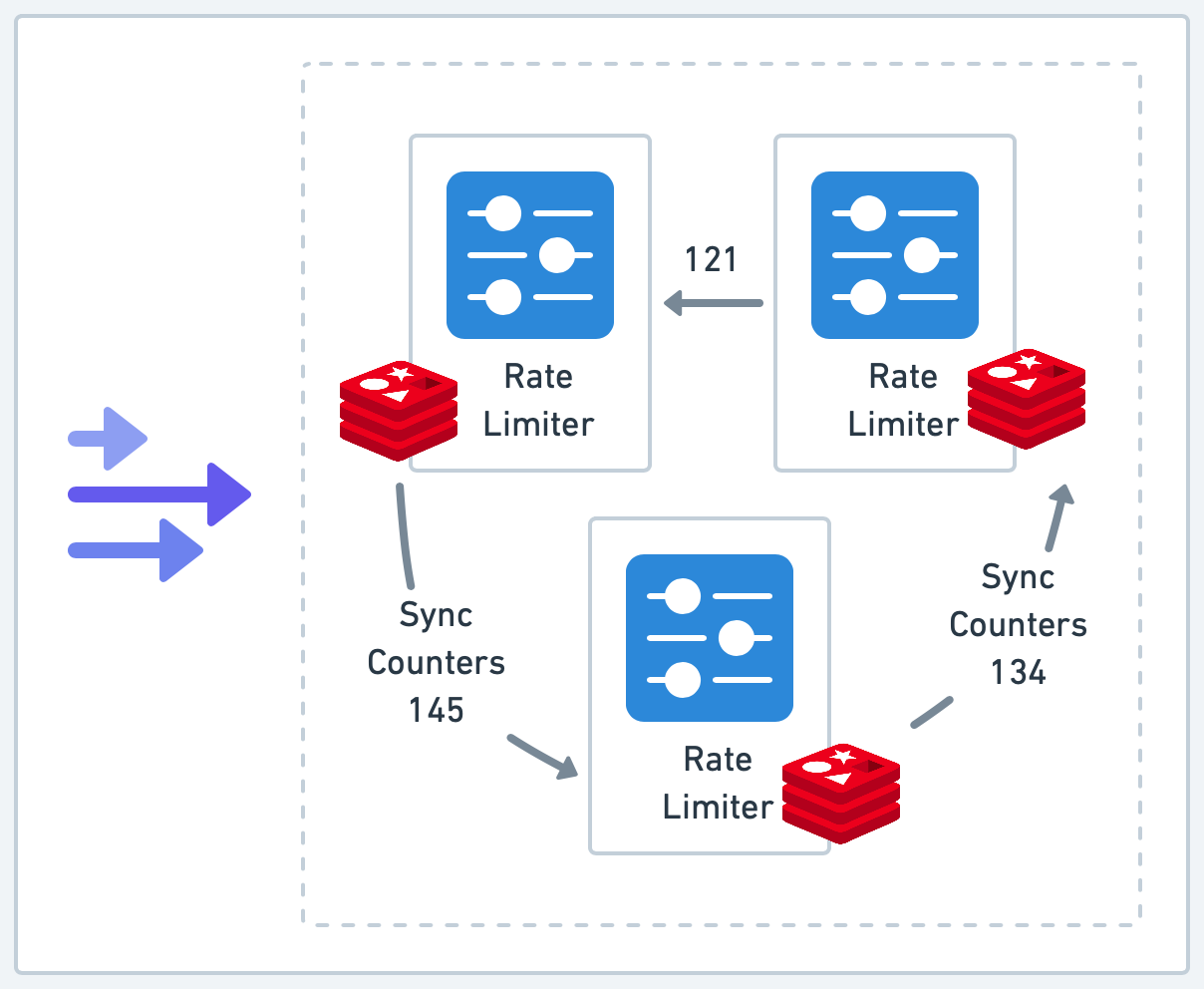
Redis ile Distributed Rate Limiting
Distributed rate limiting architecture with Redis
Redis Token Bucket Implementation
1
2
3
4
5
6
7
8
9
10
11
12
13
14
15
16
17
18
19
20
21
22
23
24
25
26
27
28
29
30
31
32
33
34
35
36
37
38
39
40
41
42
43
44
45
46
47
48
49
50
51
52
53
54
55
56
57
58
59
60
61
62
63
64
65
66
67
68
69
70
71
72
73
74
75
76
77
78
79
80
81
82
83
84
85
86
87
88
89
90
import redis
import time
import math
class RedisTokenBucketRateLimiter:
"""Redis tabanlı distributed token bucket"""
def __init__(self, redis_client: redis.Redis, capacity: int, refill_rate: float):
self.redis = redis_client
self.capacity = capacity
self.refill_rate = refill_rate
def _get_key(self, identifier: str) -> str:
"""Redis key oluştur"""
return f"rate_limit:token_bucket:{identifier}"
def allow_request(self, identifier: str, tokens: int = 1) -> tuple[bool, dict]:
"""
Lua script ile atomic operation
Returns:
(allowed, info_dict)
"""
key = self._get_key(identifier)
now = time.time()
# Lua script (atomic işlem garantisi)
script = """
local key = KEYS[1]
local capacity = tonumber(ARGV[1])
local refill_rate = tonumber(ARGV[2])
local tokens_requested = tonumber(ARGV[3])
local now = tonumber(ARGV[4])
-- Mevcut state'i al
local bucket = redis.call('HMGET', key, 'tokens', 'last_refill')
local tokens = tonumber(bucket[1])
local last_refill = tonumber(bucket[2])
-- İlk istek
if not tokens then
tokens = capacity
last_refill = now
end
-- Refill hesapla
local time_passed = now - last_refill
local tokens_to_add = time_passed * refill_rate
tokens = math.min(capacity, tokens + tokens_to_add)
-- Token tüket
local allowed = 0
if tokens >= tokens_requested then
tokens = tokens - tokens_requested
allowed = 1
end
-- State güncelle
redis.call('HMSET', key, 'tokens', tokens, 'last_refill', now)
redis.call('EXPIRE', key, 3600) -- 1 saat TTL
return {allowed, tokens}
"""
result = self.redis.eval(
script,
1, # Number of keys
key,
self.capacity,
self.refill_rate,
tokens,
now
)
allowed = bool(result[0])
remaining_tokens = int(result[1])
return allowed, {
'capacity': self.capacity,
'remaining': remaining_tokens,
'refill_rate': self.refill_rate
}
# Setup
r = redis.Redis(host='localhost', port=6379, decode_responses=True)
limiter = RedisTokenBucketRateLimiter(r, capacity=100, refill_rate=10.0)
# Kullanım
allowed, info = limiter.allow_request("user_abc", tokens=5)
print(f"Allowed: {allowed}, Remaining: {info['remaining']}")
Redis Sliding Window Implementation
1
2
3
4
5
6
7
8
9
10
11
12
13
14
15
16
17
18
19
20
21
22
23
24
25
26
27
28
29
30
31
32
33
34
35
36
37
38
39
40
41
42
43
44
45
46
47
48
49
50
51
52
53
54
55
56
57
58
59
60
61
62
63
64
65
class RedisSlidingWindowRateLimiter:
"""Redis sorted set ile sliding window"""
def __init__(self, redis_client: redis.Redis, limit: int, window_seconds: int):
self.redis = redis_client
self.limit = limit
self.window_seconds = window_seconds
def _get_key(self, identifier: str) -> str:
return f"rate_limit:sliding_window:{identifier}"
def allow_request(self, identifier: str) -> tuple[bool, dict]:
"""
Sorted set ile timestamp tracking
"""
key = self._get_key(identifier)
now = time.time()
window_start = now - self.window_seconds
# Lua script
script = """
local key = KEYS[1]
local window_start = tonumber(ARGV[1])
local now = tonumber(ARGV[2])
local limit = tonumber(ARGV[3])
-- Eski istekleri sil
redis.call('ZREMRANGEBYSCORE', key, '-inf', window_start)
-- Mevcut istek sayısı
local count = redis.call('ZCARD', key)
local allowed = 0
if count < limit then
-- Yeni istek ekle (score = timestamp, member = unique id)
redis.call('ZADD', key, now, now .. ':' .. math.random())
redis.call('EXPIRE', key, 3600)
allowed = 1
count = count + 1
end
return {allowed, limit - count}
"""
result = self.redis.eval(
script,
1,
key,
window_start,
now,
self.limit
)
allowed = bool(result[0])
remaining = int(result[1])
return allowed, {
'limit': self.limit,
'remaining': remaining,
'reset': int(now + self.window_seconds)
}
# Kullanım
limiter = RedisSlidingWindowRateLimiter(r, limit=100, window_seconds=60)
allowed, info = limiter.allow_request("api_key_xyz")
FastAPI Integration
Decorator ile Rate Limiting
1
2
3
4
5
6
7
8
9
10
11
12
13
14
15
16
17
18
19
20
21
22
23
24
25
26
27
28
29
30
31
32
33
34
35
36
37
38
39
40
41
42
43
44
45
46
47
48
49
50
51
52
53
54
55
56
57
58
59
60
61
62
63
from fastapi import FastAPI, HTTPException, Request, Response
from functools import wraps
import asyncio
app = FastAPI()
# Global limiter
limiter = RedisTokenBucketRateLimiter(r, capacity=100, refill_rate=1.0)
def rate_limit(tokens: int = 1):
"""Rate limiting decorator"""
def decorator(func):
@wraps(func)
async def wrapper(*args, **kwargs):
# Request objesini bul
request = None
for arg in args:
if isinstance(arg, Request):
request = arg
break
if not request:
raise ValueError("Request object not found")
# Identifier (IP veya user ID)
identifier = request.client.host
# Rate limit kontrolü
allowed, info = limiter.allow_request(identifier, tokens)
if not allowed:
raise HTTPException(
status_code=429,
detail="Too Many Requests",
headers={
"X-RateLimit-Limit": str(info['capacity']),
"X-RateLimit-Remaining": "0",
"Retry-After": "60"
}
)
# Response'a header ekle
response = await func(*args, **kwargs)
if isinstance(response, Response):
response.headers["X-RateLimit-Limit"] = str(info['capacity'])
response.headers["X-RateLimit-Remaining"] = str(info['remaining'])
return response
return wrapper
return decorator
# Kullanım
@app.get("/api/data")
@rate_limit(tokens=1)
async def get_data(request: Request):
return {"message": "Data fetched successfully"}
@app.post("/api/expensive-operation")
@rate_limit(tokens=10) # Pahalı işlem daha fazla token harcar
async def expensive_operation(request: Request):
return {"message": "Operation completed"}
Middleware ile Global Rate Limiting
1
2
3
4
5
6
7
8
9
10
11
12
13
14
15
16
17
18
19
20
21
22
23
24
25
26
27
28
29
30
31
32
33
34
35
36
37
38
39
40
41
42
43
44
45
46
47
48
from starlette.middleware.base import BaseHTTPMiddleware
from starlette.requests import Request
from starlette.responses import JSONResponse
class RateLimitMiddleware(BaseHTTPMiddleware):
"""Global rate limiting middleware"""
def __init__(self, app, limiter, exclude_paths: list = None):
super().__init__(app)
self.limiter = limiter
self.exclude_paths = exclude_paths or []
async def dispatch(self, request: Request, call_next):
# Exclude edilen path'leri kontrol et
if request.url.path in self.exclude_paths:
return await call_next(request)
# Rate limit kontrolü
identifier = request.client.host
allowed, info = self.limiter.allow_request(identifier)
if not allowed:
return JSONResponse(
status_code=429,
content={"detail": "Too Many Requests"},
headers={
"X-RateLimit-Limit": str(info['capacity']),
"X-RateLimit-Remaining": "0",
"X-RateLimit-Reset": str(info.get('reset', '')),
"Retry-After": "60"
}
)
# İsteği işle
response = await call_next(request)
# Response header'ları ekle
response.headers["X-RateLimit-Limit"] = str(info['capacity'])
response.headers["X-RateLimit-Remaining"] = str(info['remaining'])
return response
# Middleware ekle
app.add_middleware(
RateLimitMiddleware,
limiter=limiter,
exclude_paths=["/health", "/metrics"]
)
Tiered Rate Limiting (Plan Bazlı)
SaaS ürünlerinde farklı plan seviyelerine göre değişken rate limit uygulamak yaygındır. Free, Pro, Enterprise gibi tier’lara göre limitleri ayarlayın.
1
2
3
4
5
6
7
8
9
10
11
12
13
14
15
16
17
18
19
20
21
22
23
24
25
26
27
28
29
30
31
32
33
34
35
36
37
38
39
40
41
42
43
44
45
46
47
48
49
50
51
52
53
54
55
56
57
from enum import Enum
from pydantic import BaseModel
class UserPlan(str, Enum):
FREE = "free"
BASIC = "basic"
PREMIUM = "premium"
ENTERPRISE = "enterprise"
# Plan limitleri
RATE_LIMITS = {
UserPlan.FREE: {'capacity': 10, 'refill_rate': 0.1}, # 10/dakika
UserPlan.BASIC: {'capacity': 100, 'refill_rate': 1.0}, # 60/dakika
UserPlan.PREMIUM: {'capacity': 1000, 'refill_rate': 10.0}, # 600/dakika
UserPlan.ENTERPRISE: {'capacity': 10000, 'refill_rate': 100.0} # 6000/dakika
}
class User(BaseModel):
id: str
plan: UserPlan
async def get_current_user(request: Request) -> User:
"""Auth token'dan kullanıcıyı al"""
# Simulated
return User(id="user123", plan=UserPlan.PREMIUM)
@app.get("/api/premium-data")
async def get_premium_data(request: Request, user: User = Depends(get_current_user)):
"""Plan bazlı rate limiting"""
# Kullanıcı planına göre limiter
limits = RATE_LIMITS[user.plan]
limiter = RedisTokenBucketRateLimiter(
r,
capacity=limits['capacity'],
refill_rate=limits['refill_rate']
)
allowed, info = limiter.allow_request(f"user:{user.id}")
if not allowed:
raise HTTPException(
status_code=429,
detail=f"Rate limit exceeded for {user.plan.value} plan",
headers={
"X-RateLimit-Limit": str(info['capacity']),
"X-RateLimit-Remaining": "0",
"X-RateLimit-Reset": str(info.get('reset', '')),
"Retry-After": "60"
}
)
return {
"data": "Premium content",
"plan": user.plan.value,
"rate_limit": info
}
Best Practices
Rate limit aşımında kullanıcıya açık bilgi verin. X-RateLimit-* header’ları ve Retry-After ile ne zaman yeniden deneyebileceğini bildirin.
1. Informative Error Responses
1
2
3
4
5
6
7
8
9
10
11
12
13
14
15
16
17
18
19
20
21
22
23
@app.exception_handler(HTTPException)
async def rate_limit_exception_handler(request: Request, exc: HTTPException):
"""429 hatası için özel response"""
if exc.status_code == 429:
return JSONResponse(
status_code=429,
content={
"error": {
"code": "RATE_LIMIT_EXCEEDED",
"message": "You have exceeded your request rate limit",
"details": {
"limit": exc.headers.get("X-RateLimit-Limit"),
"reset_at": exc.headers.get("X-RateLimit-Reset"),
"retry_after": exc.headers.get("Retry-After"),
"docs": "https://api.example.com/docs/rate-limits"
}
}
},
headers=dict(exc.headers)
)
return exc
2. Graceful Degradation
1
2
3
4
5
6
7
8
9
10
11
12
13
14
15
16
17
18
19
20
21
22
23
24
25
26
async def get_data_with_fallback(identifier: str):
"""Rate limit aşıldığında cached data döndür"""
allowed, info = limiter.allow_request(identifier)
if allowed:
# Fresh data
data = await fetch_fresh_data()
await cache.set(f"data:{identifier}", data, expire=300)
return data, {"source": "fresh", "rate_limit": info}
else:
# Cached data (graceful degradation)
cached_data = await cache.get(f"data:{identifier}")
if cached_data:
return cached_data, {
"source": "cached",
"message": "Rate limit exceeded, serving cached data",
"rate_limit": info
}
# Cache de yok, hata döndür
raise HTTPException(
status_code=429,
detail="Rate limit exceeded and no cached data available"
)
3. Dynamic Rate Limiting
1
2
3
4
5
6
7
8
9
10
11
12
13
14
15
16
17
18
19
20
21
22
23
24
25
26
27
28
29
30
31
32
33
34
35
36
37
38
39
40
41
42
43
44
45
46
47
48
49
50
51
52
async def get_dynamic_limit(user: User, endpoint: str) -> dict:
"""Kullanıcı davranışına göre dinamik limit"""
# Son 24 saatteki abuse skorunu hesapla
abuse_score = await calculate_abuse_score(user.id)
# Base limit (plan bazlı)
base_limits = RATE_LIMITS[user.plan]
# Abuse varsa limiti düşür
if abuse_score > 0.8:
capacity = int(base_limits['capacity'] * 0.5) # %50 azalt
refill_rate = base_limits['refill_rate'] * 0.5
elif abuse_score > 0.5:
capacity = int(base_limits['capacity'] * 0.75) # %25 azalt
refill_rate = base_limits['refill_rate'] * 0.75
else:
capacity = base_limits['capacity']
refill_rate = base_limits['refill_rate']
# Endpoint-specific multipliers
endpoint_multipliers = {
"/api/search": 2.0, # Search daha cömert
"/api/export": 0.5, # Export daha kısıtlı
"/api/delete": 0.1 # Delete çok kısıtlı
}
multiplier = endpoint_multipliers.get(endpoint, 1.0)
return {
'capacity': int(capacity * multiplier),
'refill_rate': refill_rate * multiplier
}
async def calculate_abuse_score(user_id: str) -> float:
"""Abuse skoru hesapla (0.0-1.0)"""
# Metrikler
metrics = {
'failed_requests_24h': await redis.get(f"metrics:{user_id}:failed_24h") or 0,
'rate_limit_hits_24h': await redis.get(f"metrics:{user_id}:rate_limit_24h") or 0,
'unusual_patterns': await detect_unusual_patterns(user_id)
}
# Skor hesapla
score = (
(int(metrics['failed_requests_24h']) / 1000) * 0.4 +
(int(metrics['rate_limit_hits_24h']) / 100) * 0.4 +
(1.0 if metrics['unusual_patterns'] else 0.0) * 0.2
)
return min(1.0, score)
4. Monitoring ve Alerting
1
2
3
4
5
6
7
8
9
10
11
12
13
14
15
16
17
18
19
20
21
22
23
24
25
26
27
28
29
30
31
32
33
34
35
36
37
38
39
40
41
42
43
44
45
46
47
48
49
50
51
52
53
54
55
56
57
58
59
60
61
from prometheus_client import Counter, Histogram
# Metrics
rate_limit_requests = Counter(
'rate_limit_requests_total',
'Total rate limit checks',
['identifier', 'allowed']
)
rate_limit_latency = Histogram(
'rate_limit_check_duration_seconds',
'Rate limit check latency'
)
class MonitoredRateLimiter:
"""Metrics ile rate limiter"""
def __init__(self, limiter):
self.limiter = limiter
def allow_request(self, identifier: str, tokens: int = 1):
"""Monitored rate limit check"""
with rate_limit_latency.time():
allowed, info = self.limiter.allow_request(identifier, tokens)
# Metrics kaydet
rate_limit_requests.labels(
identifier=identifier,
allowed=str(allowed)
).inc()
# Alert koşulları
if not allowed:
# Log
logger.warning(
f"Rate limit exceeded",
extra={
'identifier': identifier,
'tokens_requested': tokens,
'remaining': info.get('remaining', 0)
}
)
# Çok fazla rate limit varsa alert
await check_rate_limit_spike(identifier)
return allowed, info
async def check_rate_limit_spike(identifier: str):
"""Rate limit spike detection"""
key = f"rate_limit_spike:{identifier}"
count = await redis.incr(key)
await redis.expire(key, 60) # 1 dakika pencere
if count > 50: # 1 dakikada 50+ rate limit
await send_alert(
f"Rate limit spike detected for {identifier}",
severity="warning"
)
Sonuç
Python ile rate limiting, API güvenliği ve performansının temel taşlarından biridir. Bu yazıda öğrendiklerimiz:
- Algoritmalar: Fixed window, sliding window, token bucket, leaky bucket
- Redis Integration: Distributed rate limiting çözümleri
- FastAPI: Decorator, middleware ve tiered limiting
- Best Practices: Monitoring, dynamic limits, graceful degradation
Önemli Noktalar
- Doğru Algoritma Seçimi: İhtiyacınıza göre (burst vs smooth)
- Redis ile Scalability: Distributed sistemlerde consistency
- Informative Responses: Kullanıcıya net bilgi verin
- Monitoring: Rate limit metrics’leri takip edin
- Graceful Degradation: Limit aşımında alternatif sunun
Algorithm Seçim Rehberi
| Algoritma | Kullanım Durumu | Avantaj | Dezavantaj |
|---|---|---|---|
| Fixed Window | Basit use case’ler | En basit, düşük overhead | Burst problem |
| Sliding Window Log | Tam doğruluk gerekli | Kesin sayım | Yüksek memory |
| Sliding Window Counter | Balanced çözüm | Memory efficient | Approximate |
| Token Bucket | Burst izni gerekli | Esnek, burst friendly | Abuse riski |
| Leaky Bucket | Sabit çıkış hızı | Smooth traffic | Latency artışı |
Kaynaklar
- IETF RFC 6585 - HTTP 429 Too Many Requests - HTTP 429 standardı
- Redis Rate Limiting Patterns - Redis resmi rate limiting patterns
- Stripe API Rate Limits - Stripe’ın rate limiting yaklaşımı
- FastAPI Rate Limiting - FastAPI middleware örnekleri
Artık production-ready, scalable ve güvenli rate limiting sistemleri kurabilirsiniz!